
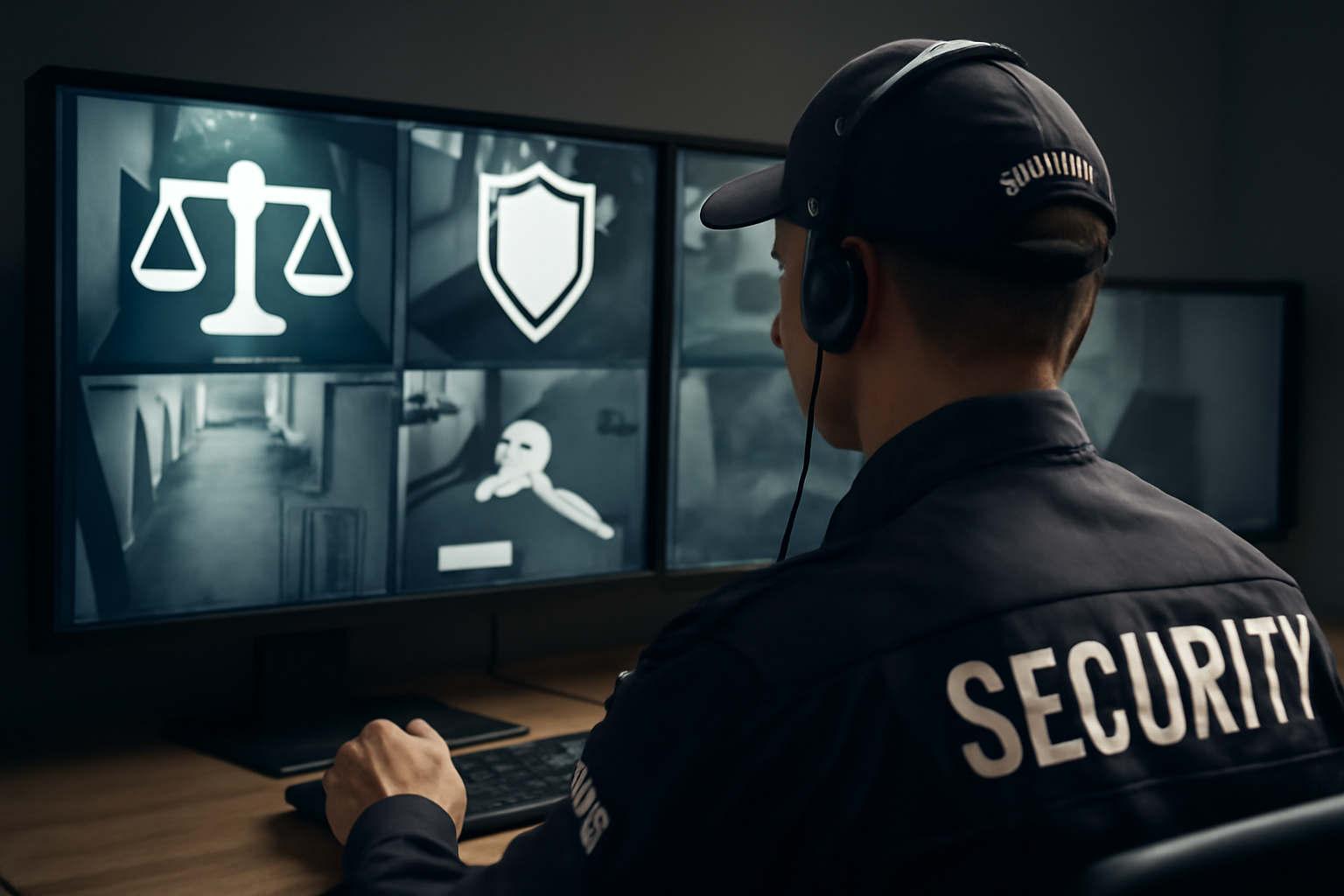
Legal Considerations in Surveillance
As a private security guard, you often use video and sometimes audio to monitor people and property. But there are rules you must follow. Knowing the basics of surveillance law helps you do your job right and avoid trouble. This article gives you the key points.
Why Surveillance Law Matters
Surveillance helps prevent crime, protect people, and gather evidence. But it can also affect people’s privacy. That’s why laws exist to limit how and where you can record. If you break these laws—even by mistake—you and your company could face serious problems.
Video vs. Audio: Different Rules
Video and audio surveillance follow different legal standards. In most places:
- Video recording in public areas is usually legal, especially if there’s no expectation of privacy.
- Audio recording often needs consent. Some states require all parties in a conversation to agree to being recorded.
Always follow site policy and local law. When in doubt, ask your supervisor or site manager before recording audio.
Places You Should Not Record
People have a right to privacy in certain places. You should not place cameras or microphones in areas like:
- Bathrooms
- Locker rooms
- Changing rooms
- Private offices (unless clearly allowed)
Even if you think it’s for safety, do not install or operate surveillance in these areas unless you have written permission and it follows the law.
Signs and Notification
Most states require that signs be posted to inform people they are being recorded. These signs should be easy to see and read. As a guard, check that signs are in place and report if they’re damaged or missing.
Handling and Storing Recordings
Surveillance footage may be used as evidence. Handle it with care. Here are the basics:
- Do not delete or alter footage unless told to by a supervisor.
- Label and store recordings properly if your site uses physical media.
- Limit access—only authorized people should view or copy footage.
Again, follow your site’s policy for storing and sharing recordings.
Shift Checklist
- ✔ Check all cameras are working and positioned correctly.
- ✔ Make sure surveillance signs are posted and visible.
- ✔ Do not record in private areas like restrooms.
- ✔ Never record audio unless approved and legal.
- ✔ Report any camera problems or footage issues.
Quick Scenario
You’re monitoring a hallway camera feed. You notice a coworker installs a small device near the break room that records audio. What should you do?
Take action right away. Audio recording may be illegal without consent. Report it to your supervisor. Do not use or share the recording. Let your company handle it according to policy and the law.
3-Question FAQ
1. Can I wear a body camera while on duty?
Only if your company allows it and it follows local laws. Some states treat body cams like audio recording, which may need consent.
2. Is it legal to record someone arguing in the parking lot?
Video? Usually yes, if it’s a public area. Audio? Only if your state allows it or you have consent. Check your site policy.
3. What if someone complains about being on camera?
Stay calm. Explain that cameras are for safety and are placed in public or common areas. Offer to let a supervisor follow up.
Action Takeaway
Before you record, ask yourself: Is this legal, allowed by company policy, and respectful of privacy? If you’re not sure, ask. Better safe than sorry. Surveillance is a tool—but only when used the right way.

