
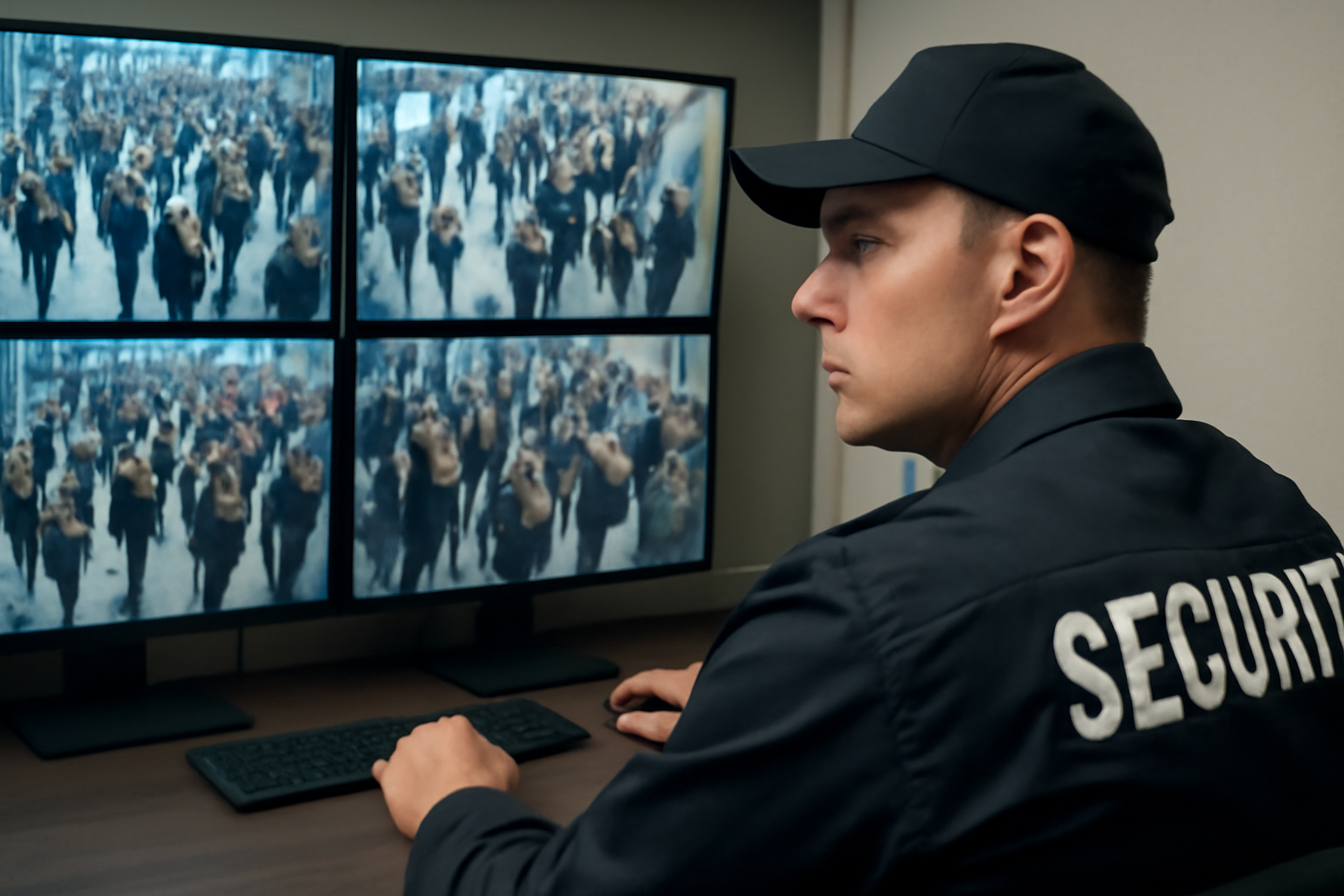
Human Monitoring Skills for Security Guards
Technology helps, but your eyes and mind are your best tools. Human monitoring means using your senses and judgment to spot threats as they happen. This article gives you practical tips to sharpen those skills right now.
Why Human Monitoring Still Matters
Cameras record. Alarms alert. But only people can see the full picture, read body language, and act fast. A trained guard can spot danger before it turns into an incident. Being alert can stop theft, violence, or trespassing before it starts.
Core Skills for Real-Time Threat Detection
- Situational Awareness: Always know what’s happening around you. Notice who’s coming, going, and acting strangely.
- Pattern Recognition: Learn what’s normal for your site. That helps you spot what’s not.
- Body Language Reading: Watch for nervousness, pacing, avoiding eye contact, or heavy clothing in warm weather.
- Verbal Cues: Listen for raised voices, threats, or people asking odd questions about security.
- Focus and Memory: Stay mentally sharp. Remember faces, vehicles, and repeat visitors.
Shift Checklist: Stay Sharp on Duty
- Check your area’s normal activity levels.
- Review any alerts or reports from the last shift.
- Test your radio and flashlight.
- Scan your surroundings every 5–10 minutes.
- Note any changes in crowd size, lighting, or behavior.
- Log suspicious activity with time and details.
Quick Scenario: Something Feels Off
You’re posted at a retail entrance. A man enters wearing a heavy coat on a hot day. He avoids eye contact and keeps glancing around. You greet him. He ignores you and heads straight to the electronics section.
Action: Follow your site policy. Alert your supervisor or another guard. Watch from a distance. Stay visible. If you suspect a threat, call for backup or law enforcement as instructed by site rules.
3 Quick FAQs
1. What if I’m not sure something is a threat?
Trust your gut, but don’t jump to conclusions. Report anything that seems off. Let trained supervisors decide next steps.
2. I get bored on slow shifts. How do I stay alert?
Keep moving when possible. Change your view. Use a mental checklist. Practice identifying exits, people, and hazards.
3. How can I improve my body language reading?
Watch people in public places. Notice posture, eye movement, hand use. Compare calm behavior to stressed behavior. Learn the difference.
Tips for Improving Your Monitoring Skills
- Take notes: Writing down what you see helps you remember and spot patterns.
- Practice drills: Do walk-throughs with a partner. Test each other’s awareness.
- Ask questions: Talk to your team about what they’ve seen. Learn from their experience.
- Stay healthy: Rest, eat well, and stay hydrated. Your brain works better when your body’s in shape.
Common Signs of Suspicious Behavior
- Looking over shoulders or checking for cameras
- Hanging around exits or restricted areas
- Trying to distract guards or staff
- Carrying oversized bags or wearing bulky clothes
- Appearing nervous, sweating, or fidgeting
“If something doesn’t feel right, it probably isn’t. Don’t ignore your instincts.”
Working With Technology
Use cameras and access control systems to support your eyes. But don’t rely on them alone. Human monitoring fills the gaps tech can’t cover. Scan camera feeds often. Walk the site. Talk to people. Be seen.
Final Takeaway: Stay Alert, Stay Ahead
Human monitoring is about being present, aware, and ready. Your focus and judgment can prevent harm and protect property. Use your senses. Know your site. Trust your training. And always follow site policy and local law.
Make it your goal each shift to spot one thing others might miss. That habit could be the key to stopping a real threat.

