
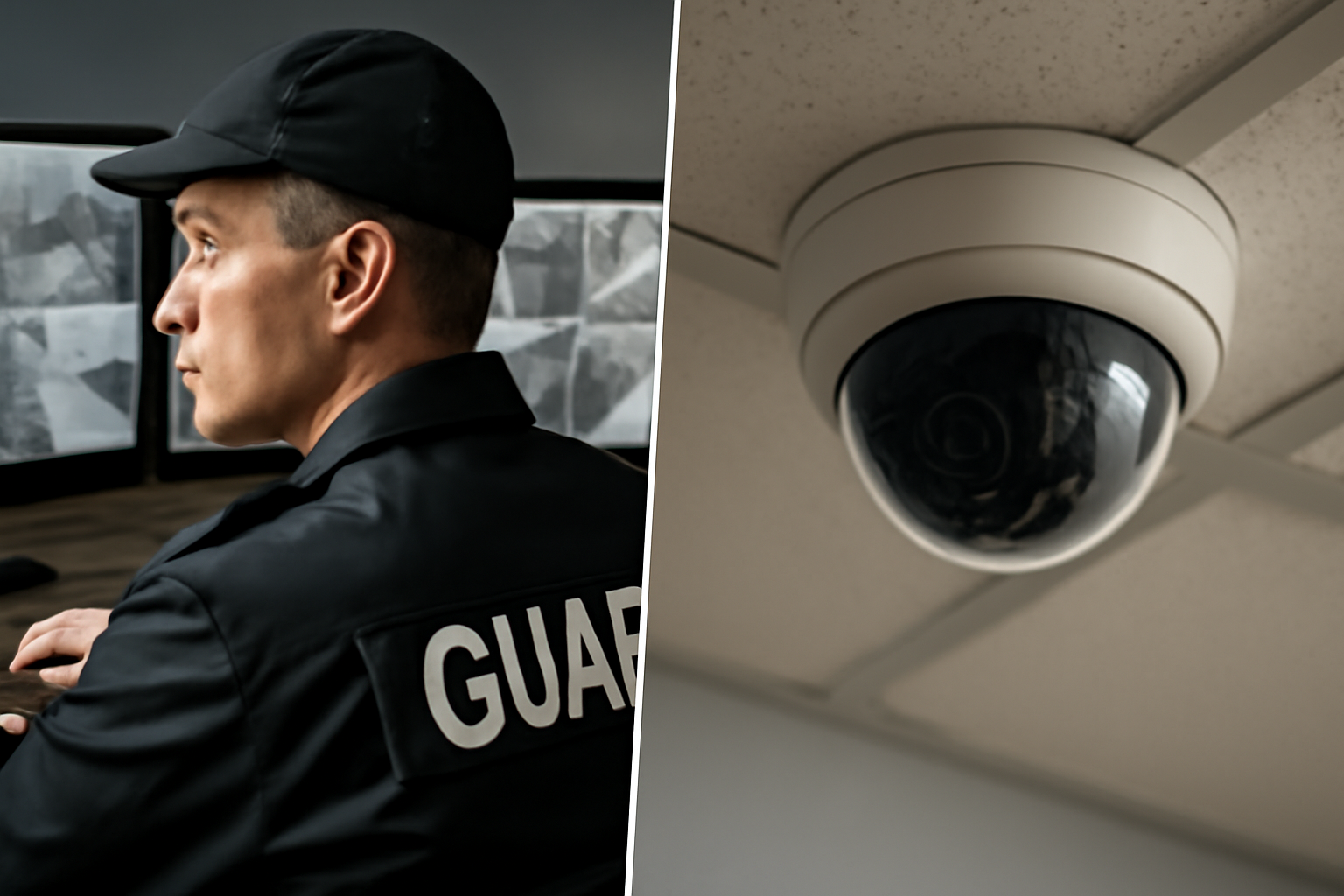
Overt vs. Covert Surveillance: What Guards Should Know
As a security guard, you use your eyes and tools to keep people and property safe. Surveillance is a big part of your job. But not all surveillance is the same. Sometimes you want people to know they’re being watched. Other times, it’s smarter if they don’t. That’s the difference between overt and covert surveillance.
What Is Overt Surveillance?
Overt surveillance is obvious and out in the open. It includes things like:
- Wearing a marked security uniform
- Standing patrols or foot patrols
- Visible security cameras
- Warning signs that say “Security Cameras in Use”
The goal is to prevent trouble before it starts. When people know they’re being watched, they’re less likely to do something wrong. This is called deterrence.
What Is Covert Surveillance?
Covert surveillance is hidden. The person being watched doesn’t know it’s happening. Examples include:
- Plainclothes security officers blending in
- Hidden cameras
- Watching from a concealed location
This method helps catch people in the act. It’s often used when there’s a known issue, like theft, and you need evidence. Covert surveillance can also help you understand patterns or behaviors without alerting anyone.
When to Use Each Type
Choosing between overt and covert depends on your goal. Ask yourself:
- Do I want to stop the behavior or catch it?
- Is this a high-traffic public area or a sensitive zone?
- What does my site policy and local law allow?
Use overt surveillance when you want a strong security presence. Use covert when you need to investigate or confirm suspicious activity.
Shift Checklist: Surveillance Basics
- Know your site’s surveillance plan
- Check all cameras (visible and hidden) at shift start
- Test radios, monitors, and recording gear
- Review patrol routes and blind spots
- Log any incidents or equipment issues
Scenario: Catching a Repeat Shoplifter
You’re working retail security. Cameras have caught a person shoplifting twice, but they haven’t been caught red-handed. Your supervisor asks you to monitor the area in plainclothes. You blend in and keep a close eye on the suspect. When they try to steal again, you alert your team. They are stopped safely and the store recovers the goods.
Takeaway: Overt patrols didn’t stop the thefts. Covert surveillance helped catch the suspect without tipping them off.
3 Quick FAQs
1. Is covert surveillance legal?
Follow your site policy and local law. Some areas have rules on audio or hidden video recording.
2. Can I switch between overt and covert on the same shift?
Yes, if your post orders and supervisor allow it. Be flexible and aware of your goals.
3. What should I do if I notice a hidden camera is not working?
Report it right away. Surveillance is only useful if it’s working properly.
Tips for Using Both Methods Together
- Use visible cameras to deter, and hidden ones to confirm suspicions
- Pair a uniformed guard at one entrance with a plainclothes guard inside
- Use signs to warn, but don’t list all camera locations
Action Takeaway
Before each shift, know your role in the surveillance plan. Use overt methods to prevent incidents. Use covert methods to investigate when needed. Always follow your site’s rules and keep safety first.

