
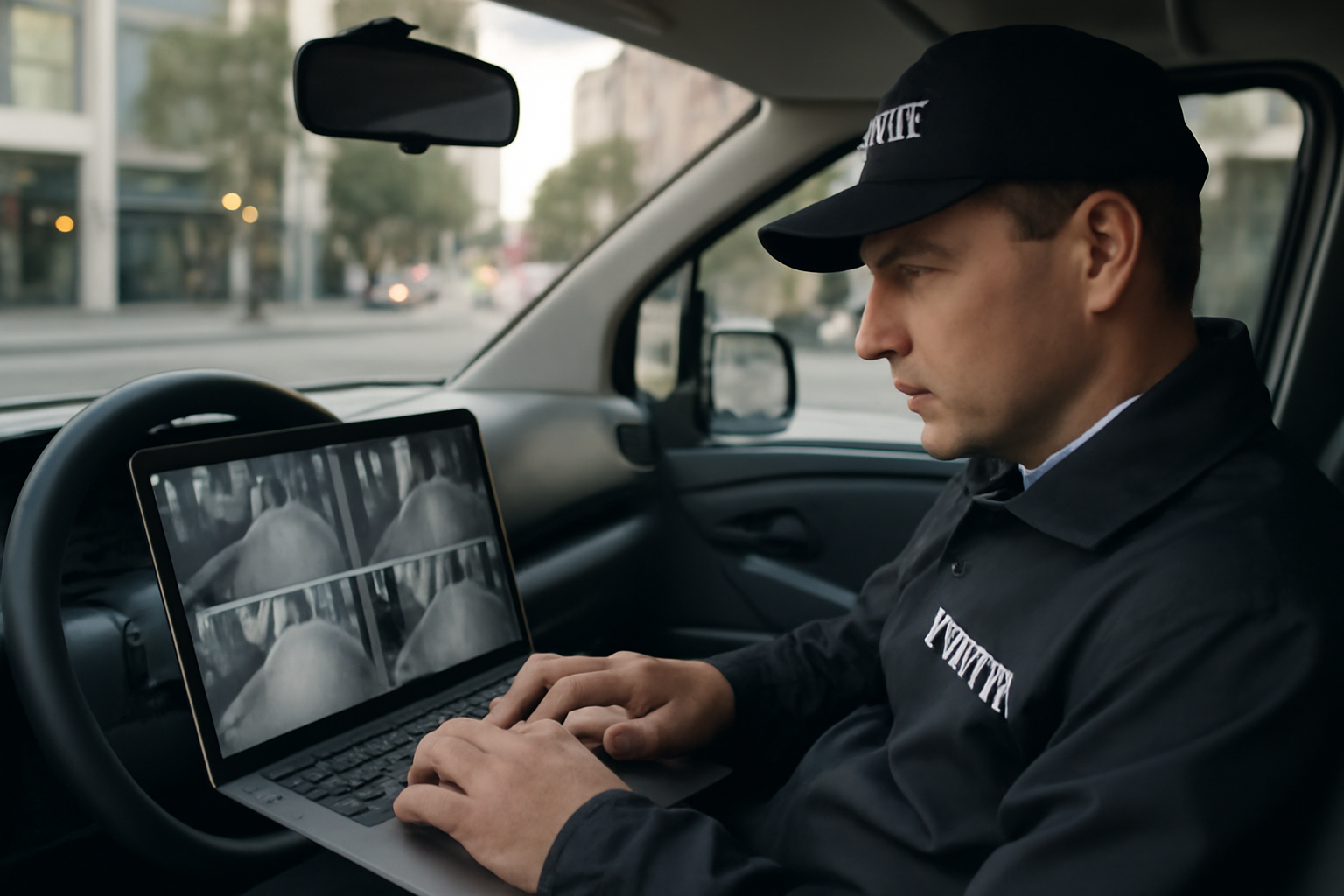
Mobile Surveillance Operations
Mobile surveillance is a key skill for many private security officers. Whether you’re in a vehicle, van, or using a portable surveillance unit, the goal is the same: observe, record, and report while staying alert and safe.
What Is Mobile Surveillance?
Mobile surveillance means monitoring people, places, or assets while on the move. This could be done from a parked or moving vehicle, or using portable camera systems. It’s used in patrols, stakeouts, or when guarding high-risk areas.
Why It Matters
- Helps cover more ground than foot patrols
- Allows quick response to incidents
- Offers protection from weather or hostile environments
- Can be discreet when done right
Shift Checklist
Before you begin your mobile surveillance shift, run through this quick list:
- Vehicle check: Fuel, lights, tires, and brakes
- Camera equipment: Charged batteries, clean lenses, memory space
- Communications: Radio check, backup phone, dispatch contact
- Documents: Site maps, patrol routes, incident report forms
- Comfort items: Water, snacks, flashlight, weather gear
Setting Up Your Mobile Unit
Use these tips to set up your vehicle or portable unit for surveillance:
- Park in a location with clear views but low visibility to the public
- Keep windows slightly cracked for air, but avoid fogging
- Mount cameras on dashboards or headrests if possible
- Use tinted windows or sunshades to hide equipment
- Keep noise low—no loud music or phone calls
Best Practices While Monitoring
Once you’re in position, follow these practices:
- Scan your surroundings every 10–15 minutes
- Take short notes on anything unusual
- Use binoculars or zoom lenses if needed
- Stay alert—rotate shifts if you’re working long hours
- Check in with dispatch regularly
Quick Scenario: Suspicious Activity in a Parking Lot
You’re stationed in a mobile unit watching a business parking lot overnight. Around 2 a.m., you notice a person walking between cars, looking inside windows.
What you should do:
- Note the time, location, and description of the person
- Start video recording if equipment is available
- Call dispatch or law enforcement if site policy allows
- Do not leave the vehicle unless it’s safe and required
- Write an incident report after the situation is resolved
3 Common Questions
1. Can I follow someone in my vehicle?
Only if your site policy and local law allow it. Never engage or pursue without clear instructions.
2. How long should I stay in one spot?
It depends on the assignment. Rotate positions every 30–60 minutes if possible to avoid detection or fatigue.
3. What if someone approaches my vehicle?
Stay calm. Keep doors locked. Speak through a cracked window. If you feel unsafe, call for backup or law enforcement.
Safety First
Always put safety above all else. Don’t put yourself at risk trying to get footage or confront someone. Your job is to observe and report, not to intervene unless trained and authorized.
Action Takeaway
Mobile surveillance is about preparation, awareness, and staying alert. Set up your unit right, follow your checklist, and report clearly. When done right, mobile monitoring is a powerful tool to protect people and property.

