
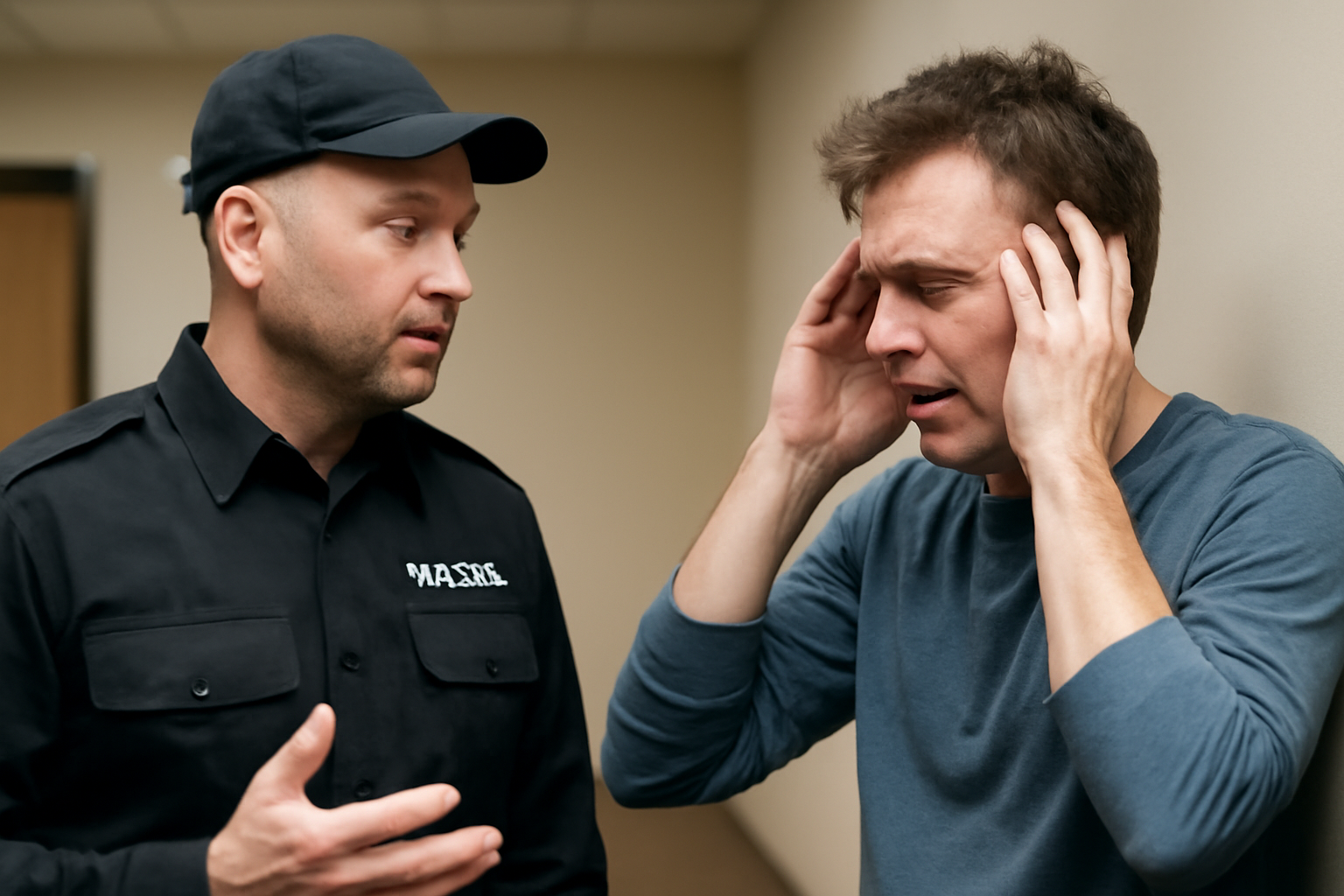
Scenario-Based De-escalation Training
De-escalation is one of the most important skills for a private security guard. You deal with upset, angry, or confused people. What you say and how you say it can calm a tense situation—or make it worse.
Scenario-based training helps you get better at this. It puts you in real-life situations so you can practice staying calm, choosing the right words, and reading body language.
Why Scenario Training Works
- It’s realistic. You practice the same kinds of problems you deal with on shift.
- It’s active. You’re not just listening to a lecture. You’re doing the work.
- It’s safe. You can make mistakes and learn from them before facing the real thing.
Common Scenarios to Practice
Here are a few situations you might face during training:
- A customer gets aggressive after being denied entry.
- Someone is loitering and refuses to leave.
- A person is intoxicated and yelling at staff.
- Two guests start arguing loudly in a public space.
Each of these can be practiced in a role-play with a trainer or team member. The goal is to handle the situation without force and without making it worse.
De-escalation Steps to Practice
- Stay calm. Control your tone, breathing, and body language.
- Keep space. Don’t crowd the person. Give them room to breathe.
- Use open body language. Hands visible, posture relaxed.
- Speak slowly and clearly. Use a calm voice and simple words.
- Listen first. Let them talk. Don’t interrupt.
- Show respect. Use their name if you know it. Don’t talk down to them.
- Offer options. Give them a way out. “You can step outside and cool off, or I can call for help.”
Shift Checklist: Are You Ready to De-escalate?
- ✅ Uniform neat and visible
- ✅ Radio charged and clipped on
- ✅ Body camera (if used) working and tested
- ✅ Mental check-in: calm and focused
- ✅ Know the site rules for handling conflict
- ✅ Partner contact info ready
Quick Scenario: Angry Guest at the Front Desk
Situation: A hotel guest storms to the desk, yelling that their room isn’t clean.
Wrong approach: “Calm down! That’s not my problem.” This adds fuel to the fire.
Better approach: Step back, hands visible. Say, “I understand you’re upset. Let’s find a way to fix this. Can you tell me what happened?”
This shows you’re listening and willing to help. It also lowers the chance of things getting physical.
Three-Question FAQ
1. What if the person doesn’t calm down?
Keep a safe distance. Repeat calm language. If they continue to escalate, follow your site policy and local law. Call backup if needed.
2. Can I walk away from a hostile person?
Yes, if it’s safe to do so. Your safety comes first. If walking away helps avoid a fight, it’s often a smart move.
3. How do I know if I handled it well?
Ask yourself: Did I stay calm? Did I avoid making it worse? Did I keep everyone safe? If yes, you did your job.
Tips for Better Role Play
- Switch roles—play the guard and the upset person.
- Use real locations like your post or lobby.
- Record your role-play (if allowed) and review it later.
- Ask a partner or supervisor for feedback.
Action Takeaway
Start small. Grab a partner and practice one scenario this week. Focus on staying calm and choosing your words carefully. The more you practice, the more natural it feels.
“Train like it’s real. So when it is real, you’re ready.”
Good de-escalation protects people—including you. Keep learning. Keep practicing. Stay safe.

