
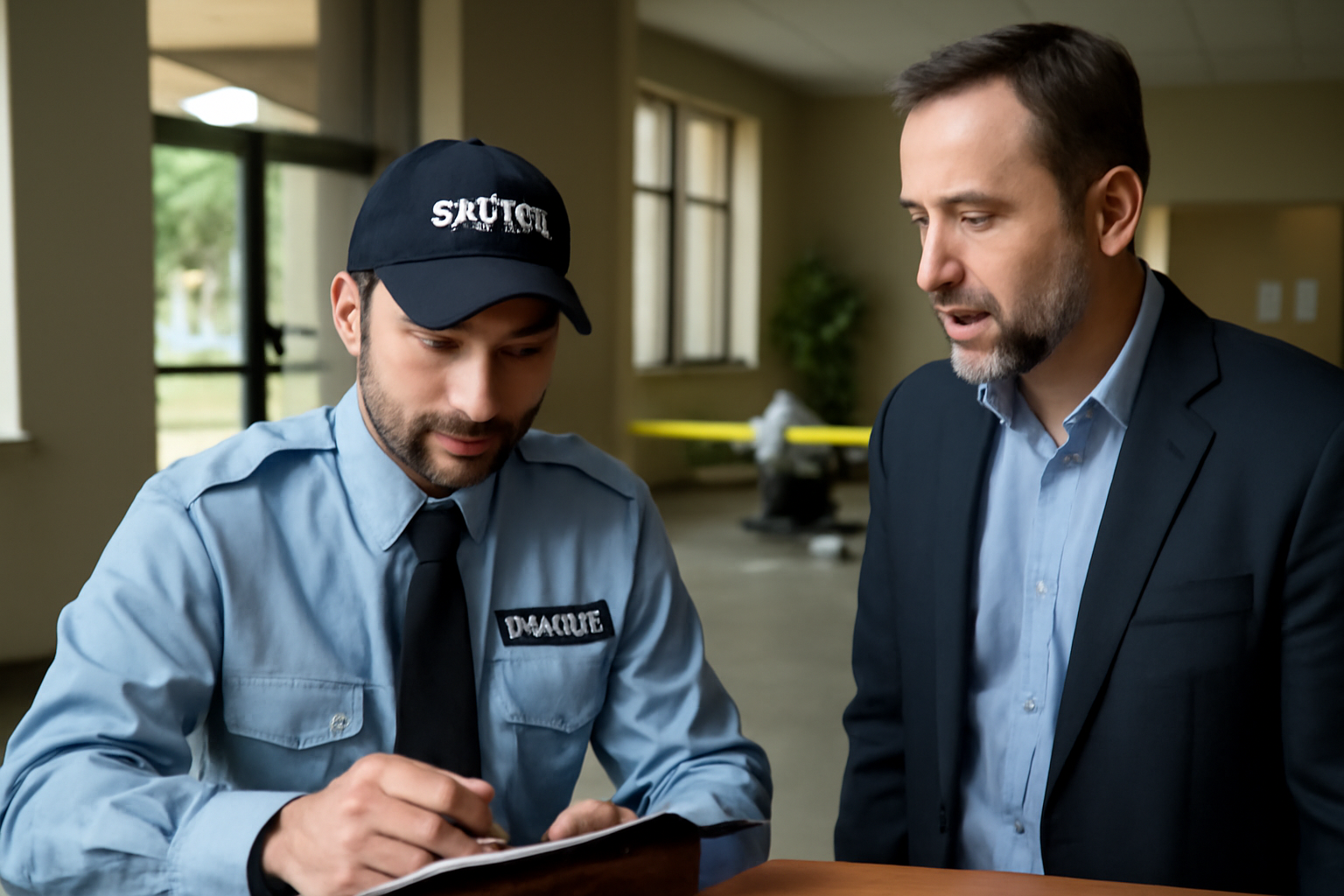
Post-Conflict Communication and Follow-Up
When a conflict ends, your job isn’t finished. What you do next matters just as much as how you handled the situation. Clear communication and proper follow-up help keep the site safe, protect you and others, and prevent future problems.
Why Post-Conflict Steps Matter
After any incident—verbal or physical—it’s important to:
- Make sure everyone is safe
- Report what happened clearly and truthfully
- Document facts while they’re fresh
- Communicate with your team and supervisor
- Help restore order and calm
Skipping these steps can lead to confusion, risk, or even blame falling on the wrong person.
Shift Checklist: After a Conflict
- Check for injuries. Call for medical help if needed.
- Secure the area. Keep bystanders safe and away.
- Call your supervisor. Give a quick summary.
- Write your report. Stick to facts. No opinions.
- Note times, names, and what was said or done.
- Speak with teammates if they saw the incident.
- Follow site policy and local law on next steps.
- Stay calm and professional. Don’t gossip.
How to Write a Clear Report
Your report might be used in investigations, insurance claims, or court. It must be clear, honest, and complete. Follow this simple format:
- Who: List all people involved (with job titles or roles if known).
- What: Describe what happened. Stick to what you saw or heard.
- When: Write the date and time the incident started and ended.
- Where: Give the exact location.
- How: Explain how the conflict started and ended.
Use short sentences. Avoid guessing or blaming. Do not include your personal feelings. If you didn’t see something, say so.
Quick Scenario: Handling the Aftermath
You break up a loud argument between two delivery drivers near the loading dock. One driver was yelling and throwing boxes. You calm them down and call your supervisor. After the area is secure, you write your report. You include the drivers’ names, what was said, and the time it happened. You also note that a coworker witnessed part of it. You stay nearby to make sure things don’t flare up again.
3 Quick FAQs
1. Should I include how I felt during the incident?
No. Stick to facts only. Leave out your feelings or guesses. Your job is to report what happened, not how you felt.
2. What if I forgot something in my report?
Tell your supervisor right away. You may be allowed to file an update or add a note. Follow site policy.
3. Do I need to follow up with anyone after the report?
Yes. Stay in contact with your supervisor. They may ask for more details or ask you to speak with HR or law enforcement. Always follow site policy and local law.
Helping Restore Calm
After a conflict, people may still feel tense. You can help by:
- Speaking in a calm, steady voice
- Being respectful, even if others aren’t
- Staying visible but non-threatening
- Watching for signs of more trouble
- Letting your team know if you see problems
Don’t joke or talk casually about what happened. That can upset others or make you seem unprofessional.
Action Takeaway
After a conflict, your main job is to keep people safe, report clearly, and restore calm. Use a step-by-step approach. Be clear, honest, and professional. Follow your site’s rules and local laws. What you do after an incident can protect you, your team, and the people you serve.

