
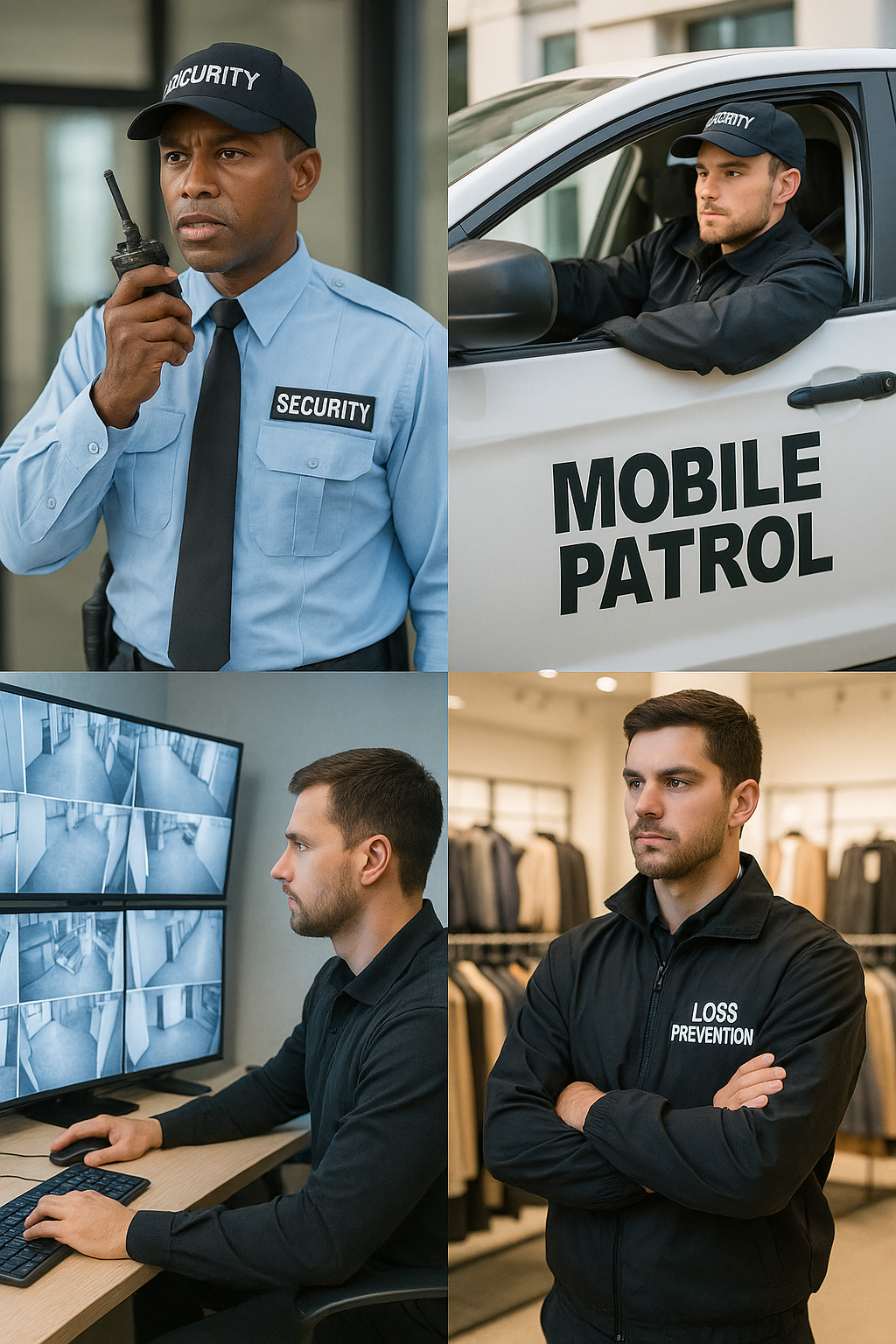
Overview of Security Roles and Specializations
Private security is more than standing at a post. There are many roles, each with different tasks and training. Knowing these roles helps you plan your career and stay sharp on the job.
Common Security Job Types
1. Unarmed Security Guard
This is the most common role. You monitor property, check IDs, report incidents, and help prevent problems. You may work at malls, offices, or events.
- Key skill: Stay alert and visible.
- Tip: Know your post orders and patrol routes.
2. Armed Security Officer
Similar to unarmed guards but with a firearm. Often used at banks, high-risk sites, or armored transport. Extra training and licensing are required.
- Key skill: Judgement under pressure.
- Tip: Keep your firearm secure and follow all safety rules.
3. Mobile Patrol Officer
You drive or walk between multiple locations. You check gates, locks, and alarms. You may respond to calls or alarms during your shift.
- Key skill: Time management and route planning.
- Tip: Keep detailed logs and be ready to report quickly.
4. Loss Prevention Officer
Common in retail. You watch for shoplifters, check receipts, and work with store staff. May wear plain clothes or uniforms.
- Key skill: Observation and discretion.
- Tip: Know store policy and when to involve police.
5. Event Security
You work concerts, sports games, or festivals. Tasks include checking bags, crowd control, and escorting guests.
- Key skill: Communication and crowd management.
- Tip: Stay calm in noisy or fast-moving situations.
6. Executive Protection
Also called bodyguards. You protect individuals from threats. This may involve travel, advance planning, and working with other teams.
- Key skill: Threat assessment and discretion.
- Tip: Always plan ahead and keep a low profile.
7. Security Dispatcher
You work in a control room. You monitor cameras, receive calls, and send officers to incidents. You may also control building access.
- Key skill: Clear communication and multitasking.
- Tip: Log all calls and actions clearly and accurately.
8. Private Investigator (PI)
Some security companies have PIs. They gather facts for legal, business, or insurance cases. May include surveillance, interviews, and records checks.
- Key skill: Research and attention to detail.
- Tip: Always follow site policy and local law.
Shift Checklist
Use this list to stay on track each shift, no matter your role:
- Arrive early, in full uniform.
- Check in with supervisor or dispatcher.
- Review post orders and updates.
- Inspect gear (radio, flashlight, notebook, etc.).
- Walk or drive your assigned area.
- Log all incidents, even small ones.
- Stay alert and report anything unusual.
- Check out properly at the end of shift.
Quick Scenario
Situation: You’re a mobile patrol officer. At 2:15 a.m., you see a side gate open at a warehouse you just checked an hour ago.
What to do:
- Stop at a safe distance. Turn on lights.
- Call dispatch. Give location and details.
- Wait for backup or police, if needed.
- Do not enter alone unless trained and required.
- Log the time, what you saw, and actions taken.
Takeaway: Your safety comes first. Follow site policy and local law.
3 Common Questions
1. What if I want to move into a higher role?
Ask your supervisor about training options. Many companies offer courses or will sponsor licenses.
2. Do I need a license for all these roles?
It depends on your state and the role. Armed roles and investigators usually need special licenses. Always check local rules.
3. Can I switch between roles?
Yes, if your company allows it and you meet the training needs. Start by learning about the new role and asking for a shadow shift.
Action Step
Take five minutes today to look at your current role. Ask yourself: What’s one skill I can improve this week? Then make a plan to practice that skill during your shift.

