
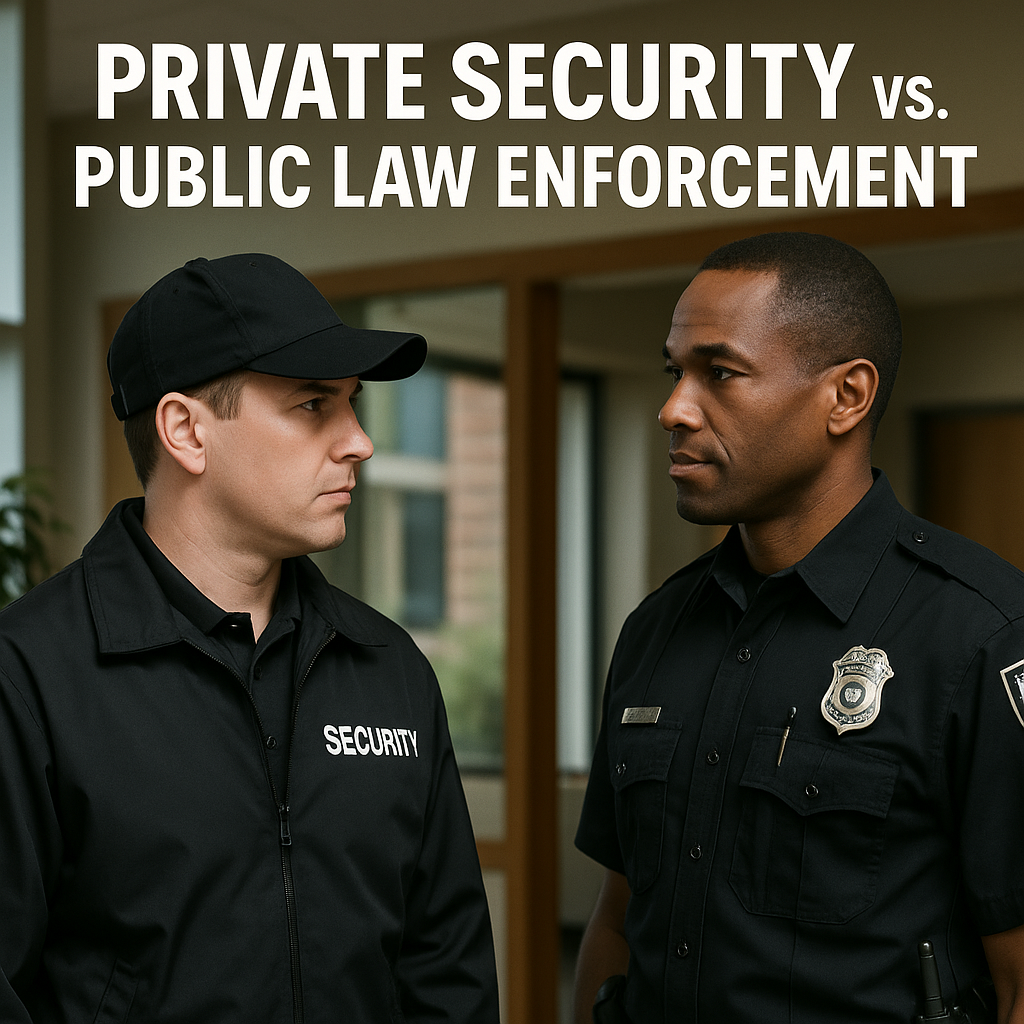
Private Security vs. Public Law Enforcement
Private security guards and public law enforcement officers often work near each other. But their roles, powers, and duties are different. Knowing where the line is helps you do your job safely and legally.
Key Differences in Authority
The biggest difference between private security and law enforcement is authority. Law enforcement officers are sworn by the government. They have powers granted by law, like arrest authority and the ability to carry firearms on duty in most places. Private security guards are hired by private companies or individuals. Your authority comes from your employer and site policies.
- Law enforcement: Government authority, broad powers, can investigate crimes and make arrests.
- Private security: Limited authority, focused on protection of property and people on private sites.
Private guards can sometimes detain someone, but only under certain conditions. This is often called a “citizen’s arrest.” Always follow site policy and local law. Use force only when allowed and only as a last resort.
Different Duties and Focus
Police officers respond to crimes, enforce laws, and protect the public. They patrol communities, investigate crimes, and make arrests. Security guards focus on preventing problems before they happen. You protect people, property, and information on private property.
- Police investigate crimes and enforce all laws.
- Security guards observe, report, and deter issues on private sites.
Guards may check IDs, monitor cameras, control access, patrol buildings, and report suspicious behavior. If a crime happens, you report it to law enforcement. You are not expected to act as a police officer.
Uniforms and Public Perception
Police uniforms are usually easy to identify. They often include badges, patches, and gear issued by the department. Security uniforms vary. Some look similar to police, while others are clearly marked with “SECURITY.”
Some people may confuse you with law enforcement. Be clear about your role. If someone asks, you can say, “I’m a private security officer. I’m here to protect this property.”
Working Together
Security guards and police often work together. You may be the first to notice a problem. You may call law enforcement to respond. Be ready to give good information: what happened, when, where, who was involved, and what you saw or heard.
Stay calm, professional, and respectful. Let police take over when they arrive. Follow your site’s policy for reporting and documentation.
Shift Checklist
- Know your site’s rules and emergency procedures
- Check your equipment before duty (radio, flashlight, ID)
- Review post orders
- Stay visible and alert
- Know how to contact local law enforcement
- Keep a notepad or use your report system to log events
Scenario: Trespasser at a Closed Site
You’re on night shift at a closed shopping center. You see someone walking near a locked store. You shine your flashlight and call out, “Security! This area is closed.” The person runs away. You notify dispatch and write a report. You do not chase or try to arrest them. You follow site policy and stay safe.
3 Common Questions
1. Can I arrest someone?
No, unless your state allows citizen’s arrest and it fits the law. Always follow site policy and local law. Your job is to observe, report, and stay safe.
2. Can I carry a weapon?
Only if you are trained, licensed, and your employer allows it. Rules vary by state and job site. Never carry a weapon unless you are fully authorized.
3. What if someone asks if I’m a cop?
Be honest. Say, “I’m not law enforcement. I’m private security here to protect this property.”
Action Takeaway
Know your role. You are not a police officer. You are a trained security professional. Your job is to prevent problems, protect people and property, and report incidents. Work within your authority, follow site policy, and always put safety first.

