
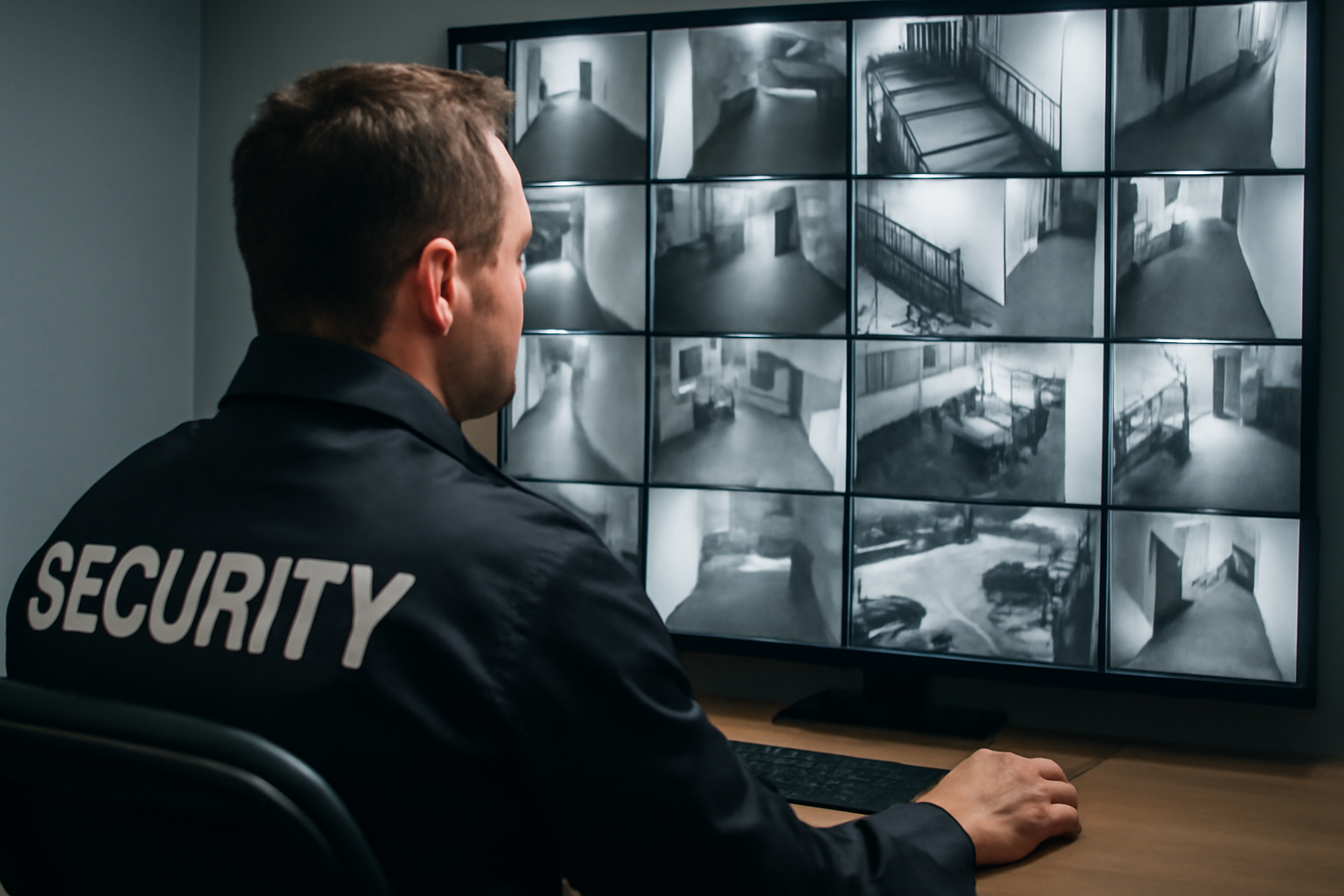
Introduction to Surveillance in Security
Surveillance is a key part of private security. Guards use it to protect people, property, and information. This article covers the basics—why surveillance matters, how to do it right, and what tools you may use on the job. Whether you’re watching cameras or making rounds, being alert and ethical is always the goal.
What Is Surveillance?
Surveillance means watching people, places, or things to help prevent or respond to problems. In security work, this often includes:
- Watching live or recorded camera feeds
- Making patrols around a site
- Monitoring alarms or sensors
- Reporting anything that seems off
Good surveillance helps stop theft, trespassing, and other risks before they get worse.
Why Surveillance Matters
Surveillance does more than just catch bad behavior. It helps you:
- Keep people safe
- Protect company property
- Support law enforcement if needed
- Make better decisions during incidents
Even just being seen watching can stop someone from doing something wrong. That’s called a deterrent effect.
Common Surveillance Tools
Here are tools you might use during a shift:
- CCTV Cameras: Closed-circuit cameras that record footage
- Monitors and Video Walls: Screens for viewing live feeds
- Radios and Intercoms: Let you report issues fast
- Motion Sensors: Alert you to movement in restricted areas
- Body-Worn Cameras: Record your interactions (if site allows)
Always follow your site’s policy and local law when using these tools.
Ethical Use of Surveillance
Surveillance can affect people’s privacy. Here’s how to stay respectful and professional:
- Only watch areas you’re told to monitor
- Do not record or share footage unless required
- Keep personal opinions out of reports
- Follow your site’s rules and local privacy laws
Remember: You’re there to protect, not to judge. Treat everyone fairly.
Shift Checklist: Surveillance Basics
- ✅ Check all cameras and monitors at start of shift
- ✅ Test radios and communication tools
- ✅ Know which areas you’re assigned to watch
- ✅ Log any issues or equipment problems
- ✅ Stay alert—don’t let screens become background noise
- ✅ Report anything unusual right away
Quick Scenario
Situation: You’re watching a parking lot camera. A person walks between cars, looking inside windows.
What to do:
- Alert your supervisor or dispatch
- Give a clear description: clothes, location, actions
- Do not confront unless your site policy allows it
- Keep watching and update your team if the person moves
Key Point: Stay calm, observe carefully, and follow protocol.
3 Common Surveillance Questions
1. Can I record someone without telling them?
Follow your site’s policy and local law. Never record for personal use.
2. What if a camera is down?
Report it right away. Log it in your shift report. If needed, adjust patrols to cover that area.
3. What should I write in a surveillance report?
Stick to facts: who, what, when, where, and how. Keep it clear and simple.
Action Takeaway
Good surveillance is about being alert, respectful, and ready to act. Know your tools, follow procedures, and always think safety first. Your eyes and attention are some of the best tools you have. Use them well.

