
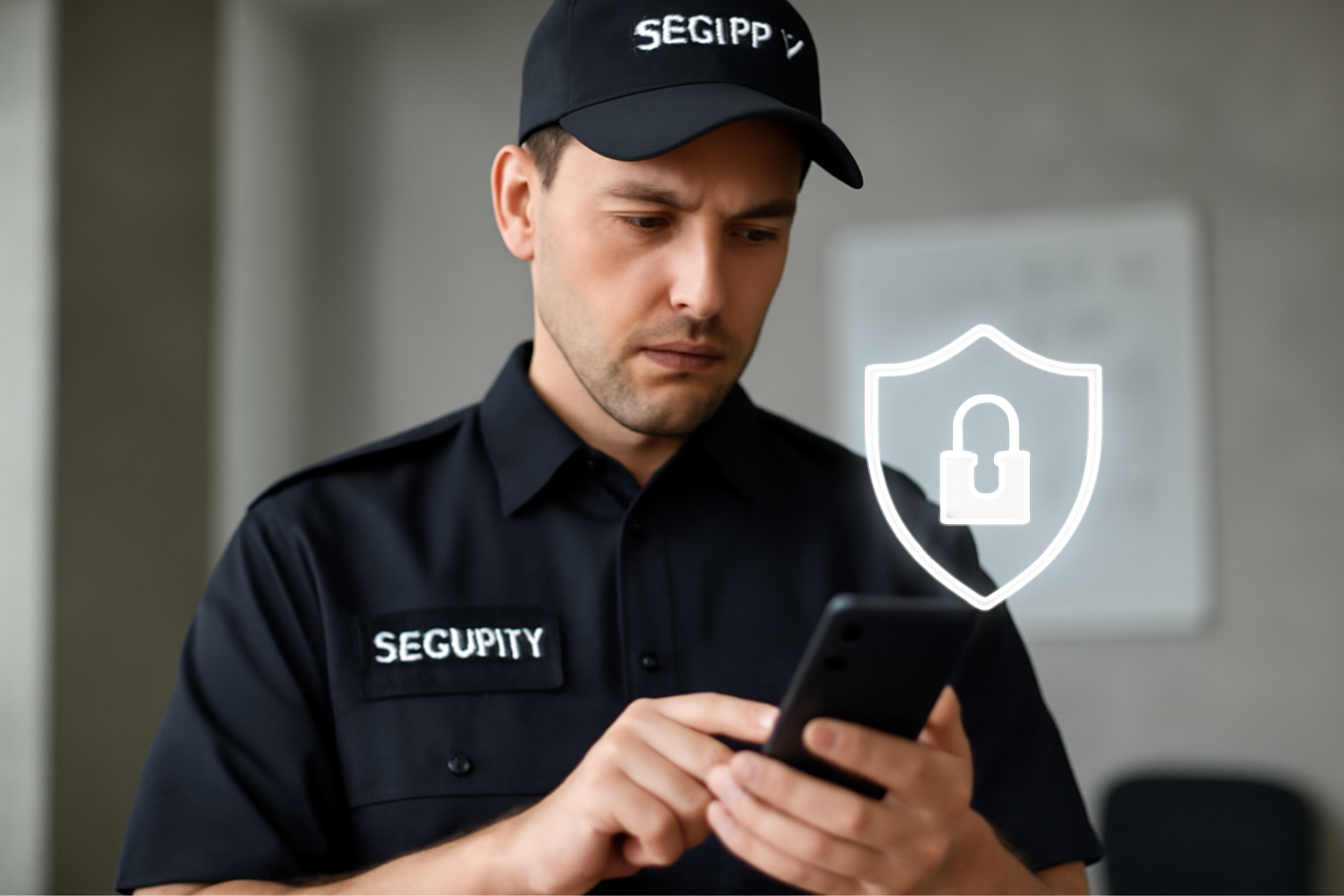
Mobile Device Security for Security Personnel
Security professionals rely on mobile devices to stay connected, report incidents, and receive updates. But these devices can also be targets for cyber threats. Hackers, scammers, and malware can turn a helpful tool into a security risk. This guide shows you how to protect your phone and tablet while on duty.
Why Mobile Device Security Matters
Your phone or tablet may hold sensitive information—like incident photos, patrol logs, or client contacts. If someone gains access, it could lead to data leaks or compromise your site’s safety. Keeping your device secure is part of your job.
Key Mobile Security Tips
Follow these steps to reduce risk and protect your device:
1. Use Strong Lock Screen Security
- Set a strong PIN, password, or biometric lock (fingerprint or face ID).
- Don’t use easy combinations like 1234 or your birth year.
2. Keep Software Updated
- Install updates for your operating system and apps as soon as they’re available.
- Updates often fix security holes that hackers target.
3. Avoid Public Wi-Fi
- Public Wi-Fi can be unsafe. Use your mobile data or a trusted hotspot instead.
- If you must use public Wi-Fi, avoid logging into sensitive apps.
4. Be Careful with Downloads
- Only download apps from the official app store (Google Play or Apple App Store).
- Check app reviews and permissions before installing.
5. Watch Out for Phishing
- Don’t click on links in suspicious texts or emails.
- If something looks off, report it and delete it.
6. Use a Security App
- Install a trusted mobile security app to scan for malware and block unsafe websites.
- Some apps offer remote wiping if your device is lost or stolen.
7. Turn Off Bluetooth and Location When Not Needed
- Leaving Bluetooth or GPS on can expose your device to tracking or unwanted access.
- Turn them off when not in use, especially during patrols.
8. Backup Your Data
- Use cloud backup or a secure drive to save important data.
- If your device is lost or damaged, you won’t lose your reports or notes.
Shift Checklist: Mobile Security
- ✅ Lock screen with PIN or biometrics
- ✅ All apps and OS updated
- ✅ Security app installed and active
- ✅ Bluetooth and GPS off (unless needed)
- ✅ Avoided public Wi-Fi
- ✅ Backed up important files
Quick Scenario
Situation: You’re on patrol and get an urgent-looking text: “Security alert! Click here to update your access app.”
What to do: Don’t click the link. This is likely a phishing attempt. Report it to your supervisor. Only update apps through the official app store.
3 Quick FAQs
1. What if I lose my phone while on duty?
Report it right away. Use a remote wipe tool if you have one. Follow your site policy and local law.
2. Can someone hack me through Bluetooth?
Yes, if Bluetooth is on and unprotected. Turn it off when not needed and don’t pair with unknown devices.
3. Should I use a password manager?
Yes. A password manager helps you create and store strong, unique passwords safely.
Takeaway: Stay Alert, Stay Secure
Your mobile device is a tool—but it’s also a target. By taking simple steps, you can reduce risks and protect yourself and your site. Stay updated, stay cautious, and follow your company’s mobile device policy.

