
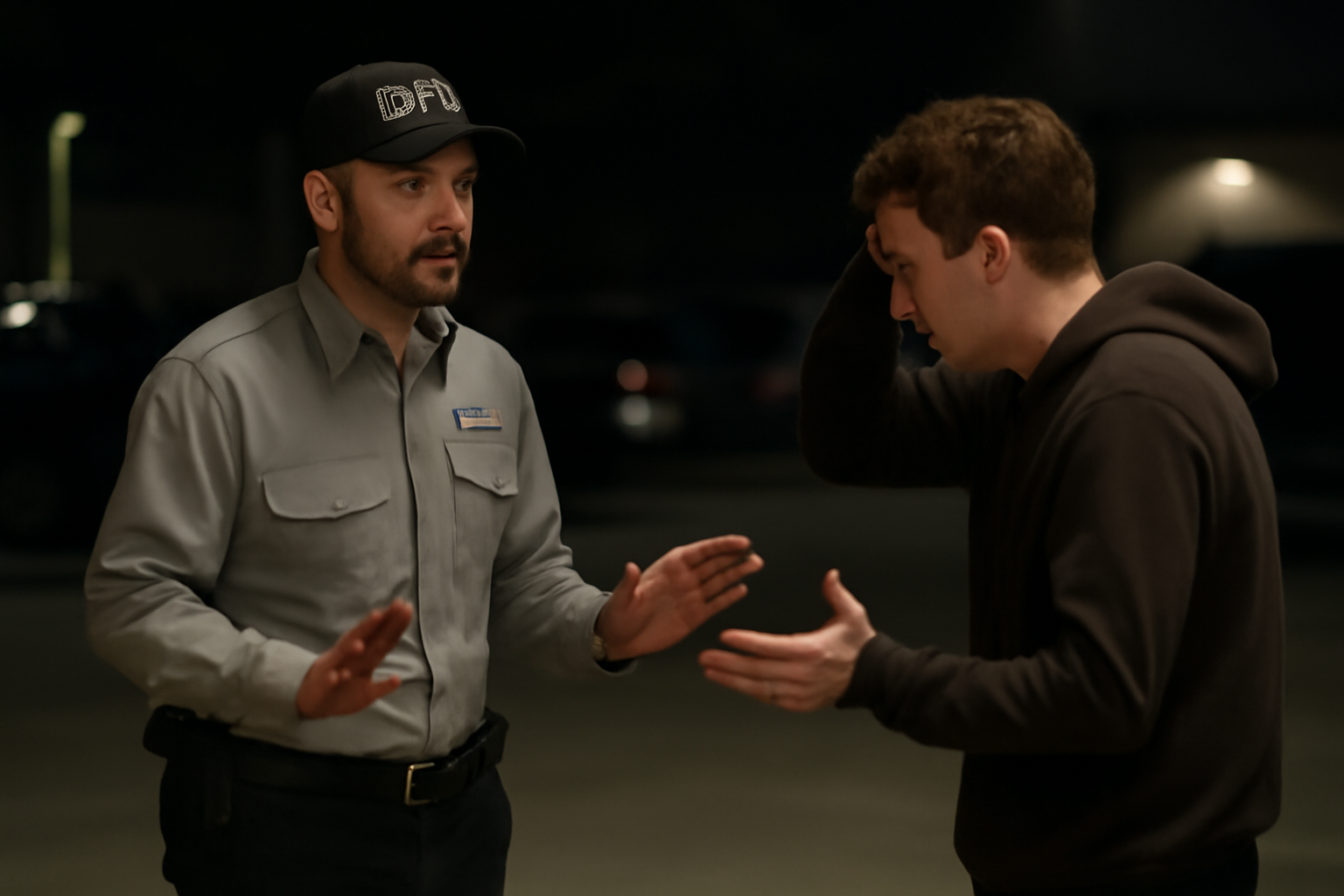
De-escalation During Physical Threats
When a situation gets tense, your goal as a security guard is to keep it from turning violent. De-escalation is how you do that. It’s the skill of calming things down before someone gets hurt. This article gives you practical steps you can use on your shift today.
Why De-escalation Matters
Using force should always be the last option. De-escalation helps you:
- Protect yourself and others from harm
- Avoid legal and job consequences
- Keep control of the situation
- Build trust with the public
Most people don’t want to fight. They’re scared, angry, or confused. If you stay calm, you can help them settle down.
Shift Checklist: Be Ready to De-escalate
- Know your site’s policy on handling threats
- Charge your radio and test it before shift
- Walk your route to check for problem spots
- Review your exit paths and safe zones
- Mentally rehearse staying calm under pressure
6 Steps to De-escalate a Physical Threat
- Keep a safe distance. Stay at least 6–8 feet away. Don’t crowd the person.
- Use open body language. Keep hands visible, palms open. Don’t cross arms or clench fists.
- Speak calmly and clearly. Use a low, even tone. Avoid shouting or sarcasm.
- Listen more than you talk. Let them vent. Nod and show you’re listening.
- Offer simple choices. Give them a way to save face. Example: “You can wait outside or come back later.”
- Call for backup early. Don’t wait until things get physical. Use your radio.
What NOT to Do
- Don’t argue or debate
- Don’t make sudden moves
- Don’t touch the person unless needed for safety
- Don’t threaten or insult
Quick Scenario: Late-Night Lot Confrontation
You’re patrolling a parking lot at midnight. A man approaches, angry and shouting about his towed car. He’s pacing and clenching his fists.
What you do:
- Keep 8 feet away
- Hold your hands open and visible
- Say calmly: “I hear you’re upset. Let’s talk over here where it’s safer.”
- Radio your partner to stay nearby
- Offer options: “I can give you the tow number, or you can wait here for a supervisor.”
He calms down enough to take the number and leave. No fight, no force used.
3 Common Questions
1. What if I can’t calm the person down?
If they stay aggressive, back off and call for help. Your safety comes first. Don’t try to control someone who’s out of control.
2. Can I touch someone to get them to leave?
Only if needed for safety. Touching can be seen as force. Follow your site policy and local law.
3. What if they threaten me directly?
Stay calm, create space, and call for backup. Don’t match their energy. Your calm is your strength.
Action Takeaway
De-escalation starts with your mindset. If you stay calm, listen, and give people a way out, most threats won’t turn violent. Practice these steps each shift. The more you use them, the more natural they’ll feel. Your safety—and theirs—depends on it.

