
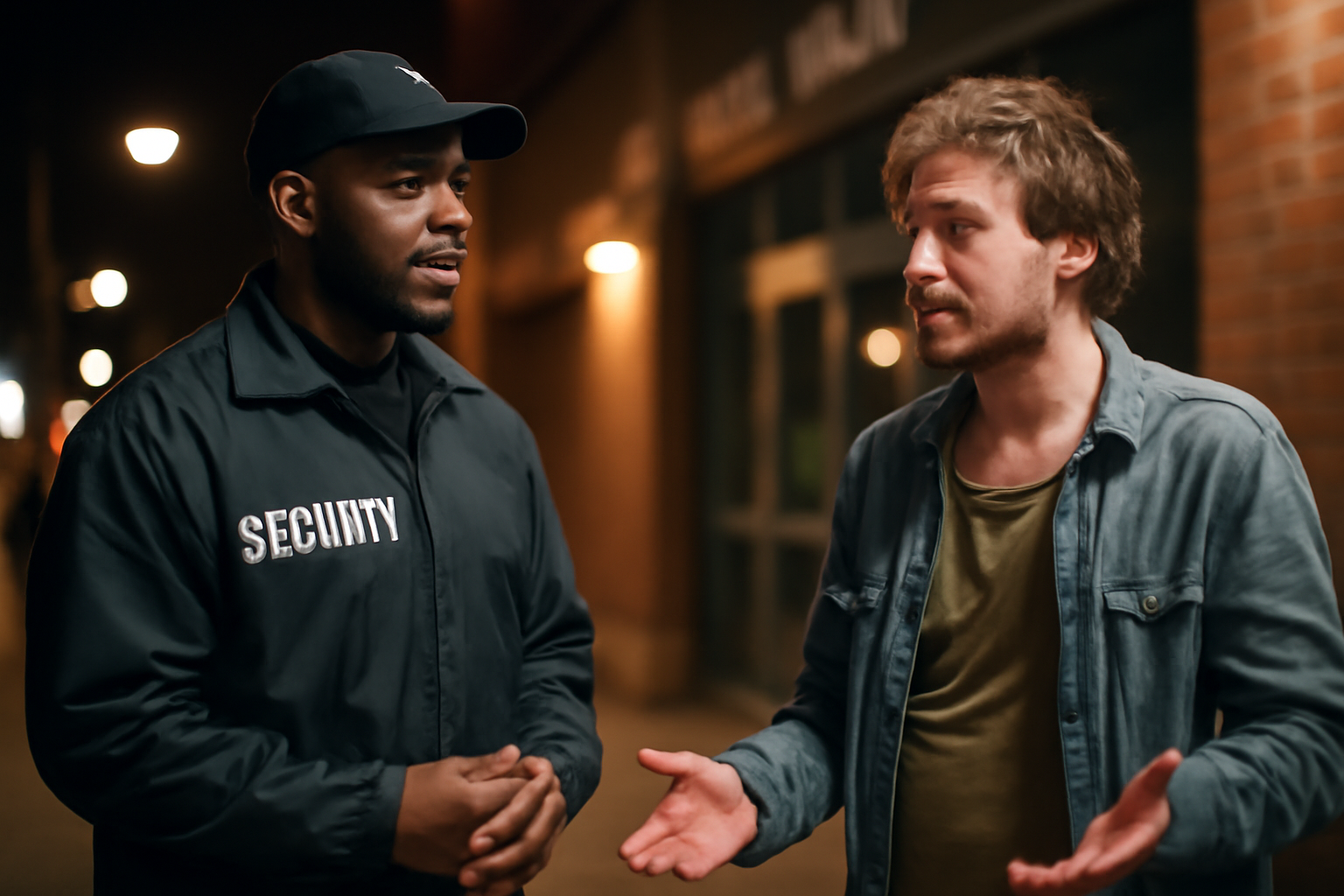
Handling Intoxicated or Impaired Individuals
Security guards often deal with people who are intoxicated or otherwise impaired. These situations can quickly become unsafe if not handled the right way. Your job is to keep yourself, the individual, and others around you safe. That means staying calm, using good judgment, and following your site’s rules.
Know the Signs of Impairment
People under the influence of drugs or alcohol may act differently. Watch for:
- Slurred speech
- Unsteady walking or standing
- Bloodshot or glassy eyes
- Loud or aggressive behavior
- Confusion or slow responses
Not everyone who acts this way is intoxicated, but these signs can help you decide how to approach the situation.
Stay Calm and Respectful
Never raise your voice or use force unless it’s absolutely necessary for safety. An impaired person may not understand what you’re saying or may feel threatened easily. Speak in a calm, even tone. Use simple words and short sentences.
Example: Instead of saying, “You’re trespassing and need to vacate the premises immediately,” try, “Sir, this area is closed. I need you to move over there with me.”
Follow Site Policy and Local Law
Every site has its own rules. Some allow you to escort someone off the property. Others require you to call a supervisor or law enforcement. Know your post orders. If you’re unsure, contact your supervisor.
Never try to diagnose someone or accuse them of being drunk or high. Just focus on behavior and safety.
Keep a Safe Distance
People under the influence can act unpredictably. Stand at least an arm’s length away. Don’t turn your back on them. Watch their hands. If they become aggressive, back away and call for help.
Use De-escalation Techniques
- Stay calm and non-threatening
- Let them talk—don’t interrupt
- Offer choices if possible (“You can walk with me or we can wait here for help.”)
- Avoid arguing or correcting them
De-escalation isn’t about winning. It’s about lowering tension and staying safe.
Quick Scenario
You’re posted at a shopping center. A man is stumbling near the entrance, yelling at passersby. He smells of alcohol and slurs his words.
- You radio your supervisor and let them know the situation.
- You approach calmly, keeping a few feet of space.
- You say, “Sir, are you okay? This is a public area. Let’s step over here to talk.”
- If he cooperates, you guide him away from the crowd.
- If not, you don’t argue. You call for backup or law enforcement, per site policy.
Always prioritize safety over control. Your goal is to reduce risk, not to force compliance.
Shift Checklist: Handling Impairment
- ✅ Review your site’s policy on dealing with intoxicated persons
- ✅ Know your radio call signs and emergency contacts
- ✅ Practice calm, clear communication
- ✅ Stay aware of your surroundings and exits
- ✅ Keep a safe distance and never turn your back
3-Question FAQ
Q1: Can I detain someone who is drunk?
A: Only if your site policy and local law allow it. Usually, you should call law enforcement unless there’s an immediate safety risk.
Q2: What if the person is passed out?
A: Check for breathing and call for medical help right away. Do not try to wake or move them unless they’re in danger.
Q3: What if they become violent?
A: Back away, protect others, and call for help. Use force only if needed to prevent harm, and only within your training and policy.
Takeaway
Handling intoxicated or impaired individuals is part of the job. Stay calm, keep your distance, and follow your site’s rules. Your safety comes first. Respect and clear thinking go a long way in tough situations.

