
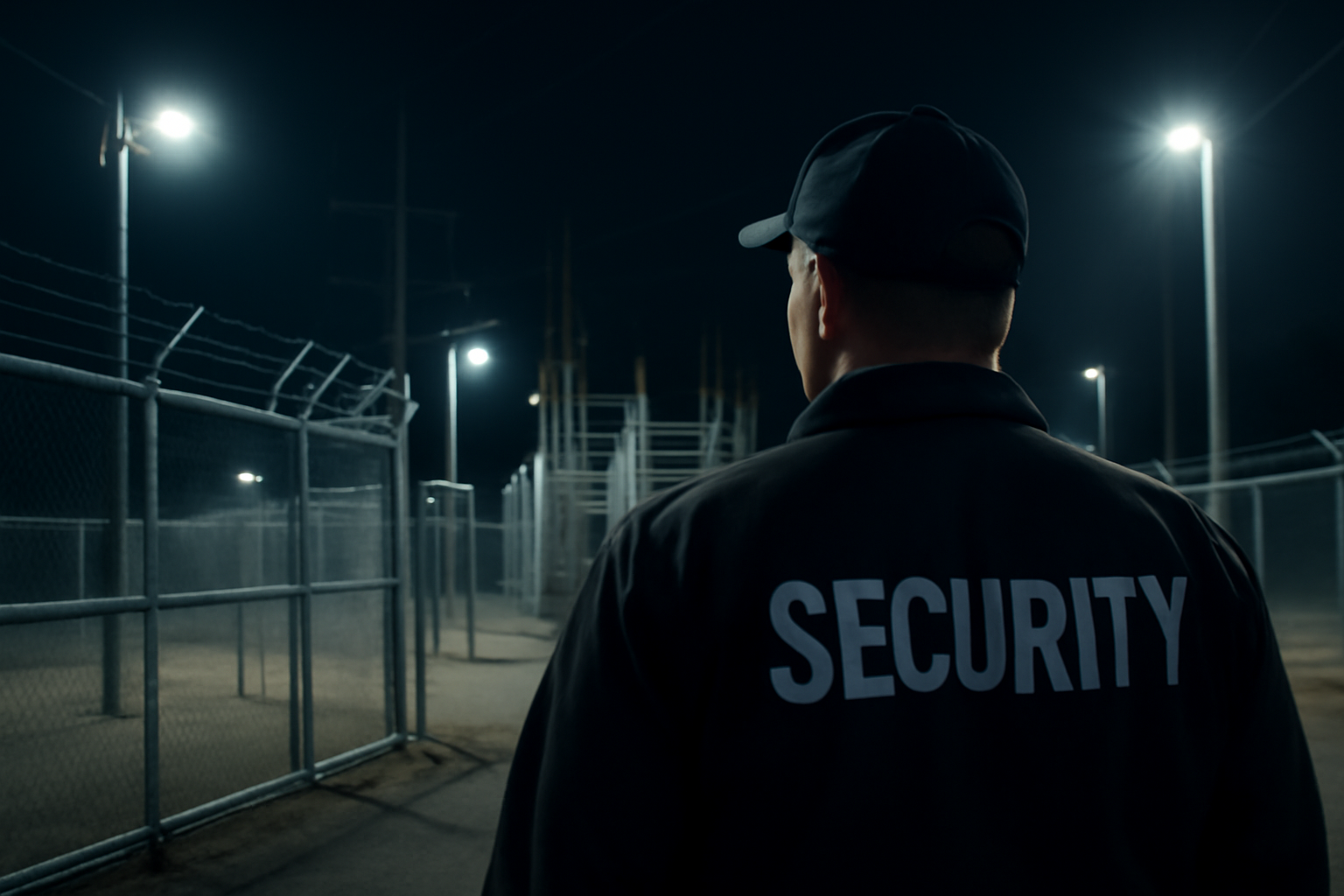
Physical Security for Critical Infrastructure
Critical infrastructure includes places that keep society running. This means power plants, water systems, transportation hubs, and data centers. If these are attacked or damaged, people can lose access to electricity, clean water, or communication. That’s why physical security guards like you play a key role in protecting them.
Why It Matters
Disrupting critical infrastructure can cause major problems. Criminals, vandals, or even terrorists may target these sites. Your job is to prevent access, report threats, and respond quickly to any incident. You help keep the public safe by doing your role well.
Common Threats to Critical Sites
- Unauthorized entry (trespassers, intruders)
- Theft of valuable equipment or data
- Sabotage or vandalism
- Cybersecurity breaches (linked to physical access)
- Workplace violence or insider threats
Each site has its own risks. Always follow your post orders, site policy, and local law.
Key Areas to Watch
- Perimeter: Fences, gates, motion sensors, and cameras
- Entry Points: Doors, loading docks, turnstiles
- Control Rooms: Where systems are monitored or controlled
- Utility Areas: Fuel tanks, generators, electrical panels
- Data Zones: Server rooms, network closets
Know your site’s layout. Walk it often. Report anything broken or suspicious.
Physical Security Basics
- Check IDs and badges
- Log all visitors and contractors
- Stay alert, especially during shift changes or off-hours
- Use radios or phones to report issues right away
- Know emergency exits and shutoffs
Shift Checklist
Use this checklist to stay sharp and ready:
- Inspect your uniform and gear (radio, flashlight, PPE)
- Review post orders and any updates
- Walk the perimeter and check all access points
- Test communication equipment
- Check for working lights, cameras, and alarms
- Confirm who is authorized on-site during your shift
- Log all incidents, even minor ones
- Keep a calm, alert, and professional presence
Scenario: Unauthorized Entry at Night
You’re on patrol at a data center. It’s 2:30 a.m. You spot a shadow near the back fence. The person ducks when they see you. What do you do?
Correct Response:
- Keep a safe distance and use your flashlight to signal
- Call for backup or notify your supervisor
- Do not approach alone
- Report the time, location, and description
- Let law enforcement handle if needed
Never try to confront a trespasser alone. Your safety comes first.
3-Question FAQ
1. What should I do if I see someone tailgating into a secure area?
Politely stop them. Ask for ID. Check if they are on the authorized list. Follow site policy and always report it.
2. How often should I patrol the site?
Follow your post orders. Most sites require regular patrols every hour or two. Vary your route to avoid patterns.
3. What if a fire alarm goes off?
Follow emergency procedures. Alert the control center. Help with evacuation if safe to do so. Never ignore alarms.
Action Takeaway
Critical sites need strong security. As a guard, you are the first line of defense. Stay alert, follow your checklist, and report anything unusual. Protecting infrastructure protects everyone.

