
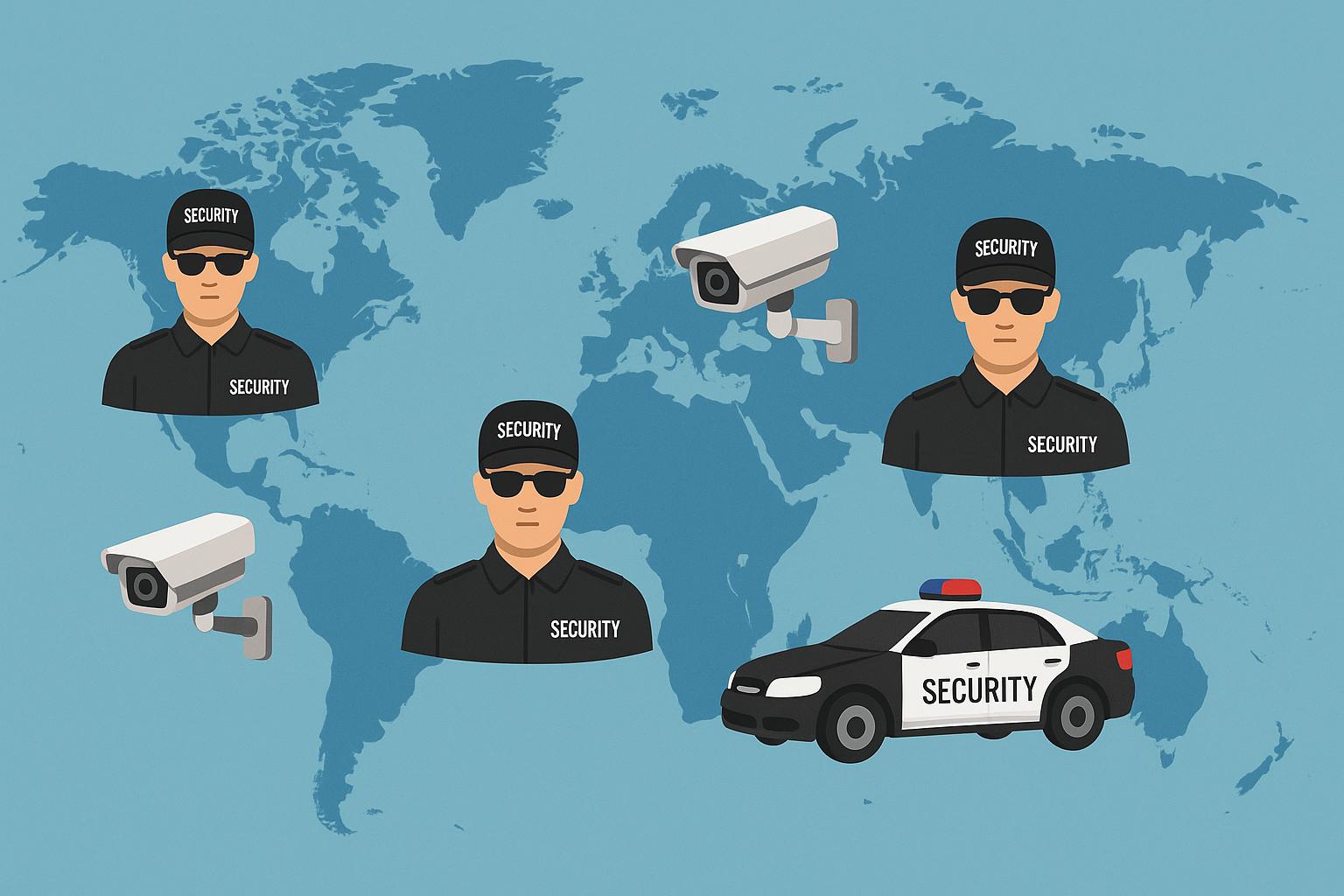
Global Private Security Industry Trends
The world of private security is growing fast. More companies, homes, and events are hiring private guards. From malls to oil fields, guards are needed everywhere. In this article, you’ll learn how the industry is changing and what it means for your job.
Why the Industry Is Growing
Several reasons are driving the demand for private security:
- More crime and threats: Theft, protests, and cybercrime are rising in many areas.
- Fewer public police: Some cities have fewer officers, so businesses hire private guards.
- More private sites: Malls, factories, hospitals, and schools want on-site guards.
- Global events: Sporting events, elections, and disasters increase need for crowd control and protection.
Governments and businesses are relying more on private security to fill gaps.
Key Regions to Watch
- North America: The U.S. and Canada have the largest market. Many guards work in retail, residential, and healthcare settings.
- Latin America: High crime rates make private security a must in many cities.
- Asia-Pacific: Fast growth in India, China, and Southeast Asia. Urban growth and tech use are big drivers.
- Africa: Rapid demand in Nigeria, South Africa, and Kenya. Guards often protect oil, gas, and mining sites.
- Europe: Focus on event security, transport hubs, and anti-terror work.
New Tools and Tech
Security work isn’t just flashlights and radios anymore. Here’s what’s changing:
- Body cameras: More companies now require them for accountability.
- Drones: Used for patrolling large areas like farms or borders.
- Mobile apps: Guards report incidents, check in, and get shift updates from phones.
- AI and facial recognition: Some sites use this to control access and detect threats.
But remember—technology helps, but human judgment still matters most.
What This Means for You
As a working guard, these trends affect you every day. Here’s how:
- More job options: Guards are needed in more places and roles.
- Higher expectations: Clients want guards who are alert, polite, and tech-ready.
- More training: Guards need to learn new tools and safety rules.
Staying sharp and learning new skills will help you keep your job—and move up.
Shift Checklist
Use this quick checklist to stay ready on any shift:
- ✅ Arrive 15 minutes early
- ✅ Wear full uniform and gear
- ✅ Check radio, flashlight, and phone battery
- ✅ Review site post orders
- ✅ Walk your post once at start of shift
- ✅ Greet team and report any concerns
Quick Scenario: Tech on Patrol
You’re on a night shift at a warehouse. Your phone app shows a motion alert in the back lot. You walk over and see a person near the fence.
What do you do?
- Stay calm and keep a safe distance.
- Turn on your bodycam if required.
- Use your flashlight and voice to alert the person you are security.
- Call your supervisor or dispatch per your site’s policy.
- Do not approach alone if you feel unsafe. Wait for backup.
Takeaway: Use tech, but trust your training. Always follow site policy and local law.
3 Common Questions
1. Will AI replace security guards?
No. Tech helps, but human presence is still key. Guards handle things machines can’t—like judgment, empathy, and fast action.
2. Do I need to learn new tools?
Yes. Many sites now use apps and video tools. Ask your supervisor what’s used on your post, and get trained.
3. How can I move up in this industry?
Stay reliable, look sharp, and ask for more duties. Training in report writing, first aid, and tech can help you earn promotions.
Final Takeaway
The private security world is changing fast. Guards who stay alert, learn new tools, and follow safety rules will be in high demand. Whether you’re on patrol or monitoring cameras, your role matters. Stay ready, stay sharp, and stay safe.

