
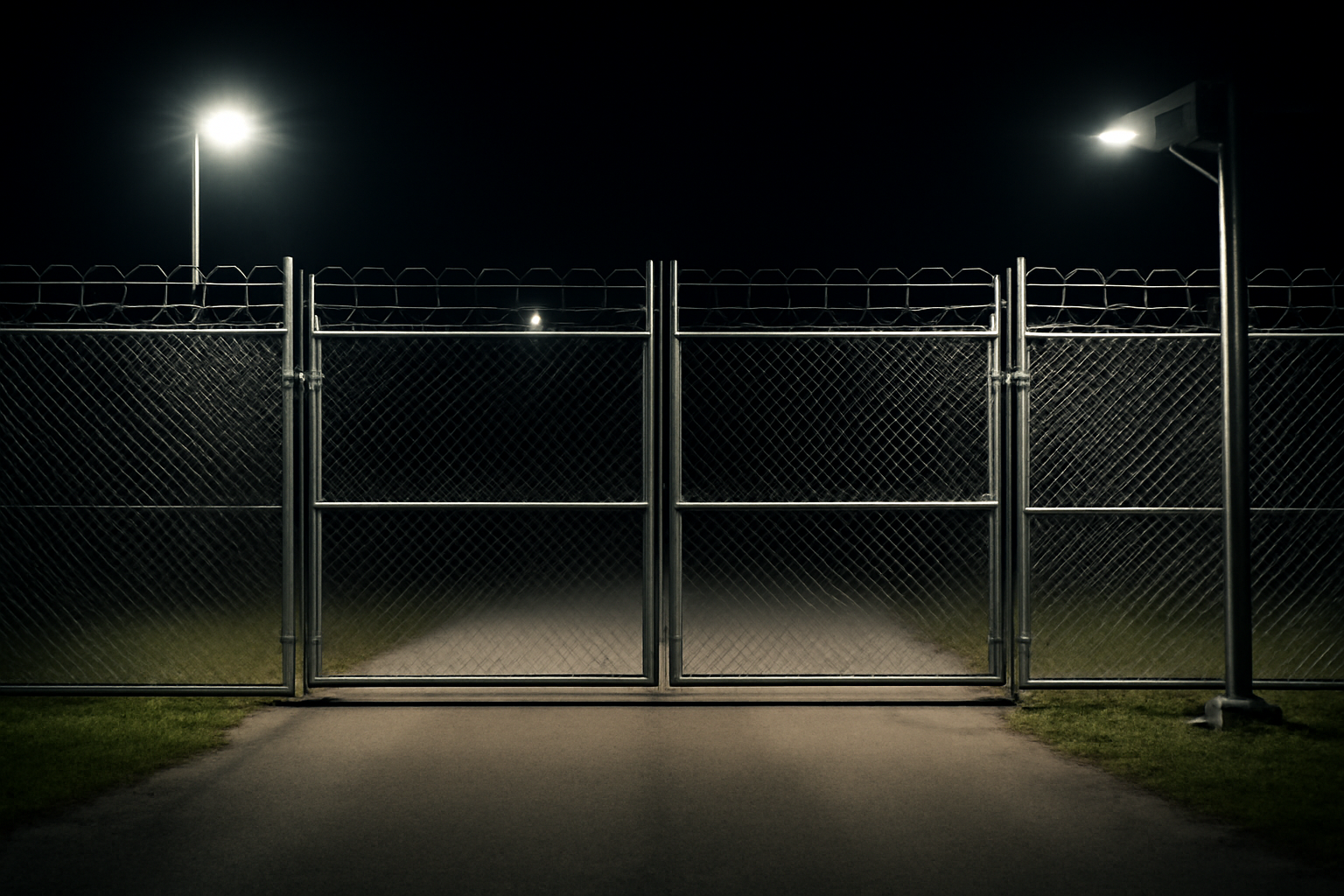
Perimeter Security Best Practices
As a security guard, your first line of defense is the perimeter. This includes fences, gates, lighting, and barriers. If these are weak, the whole site is at risk. Here’s how to check and protect them during your shift.
Why the Perimeter Matters
Most intrusions start at the edge. A strong perimeter slows down or stops unauthorized access. It also gives you time to respond. Your job is to spot weak points and report or fix them right away.
Fences and Walls
- Check for damage: Look for holes, rust, or loose panels. Even small gaps can be entry points.
- Watch for climbing aids: Remove stacked pallets, trash bins, or anything near the fence that someone could climb on.
- Confirm height and condition: Most fences should be at least 6 feet tall and in good repair. Report anything lower or broken.
Gates and Entry Points
- Test locks and hinges: Make sure gates close fully and lock securely.
- Control access: Only allow entry to authorized people. Check IDs or badges if required by site policy.
- Stay visible: Your presence at gates deters intruders. Rotate positions if needed to keep coverage strong.
Lighting
- Check all lights: During night shifts, walk the perimeter and note any burned-out bulbs or dark zones.
- Use motion sensors: If installed, test them. A light that turns on suddenly can scare off trespassers.
- Report outages fast: A dark area is a weak spot. Let your supervisor know right away.
Barriers and Bollards
- Inspect for damage: Barriers should be solid and not bent or broken.
- Keep clear: Don’t let barriers get blocked by vehicles or trash. They must be ready to stop a threat.
- Know the layout: Be familiar with where all vehicle barriers are and how they work.
Quick Scenario
You’re on a night shift. You notice a section of the back fence is loose and someone could slip through. What do you do?
Answer: Follow your site policy. Secure the area if safe to do so. Call your supervisor or dispatch. Mark the location. Watch the spot until help arrives or the issue is logged.
Shift Checklist
- Walk the full perimeter at start, middle, and end of shift
- Check all fences and gates for damage or tampering
- Test lighting and motion detectors
- Inspect barriers and clear any obstructions
- Log any issues and report them to your supervisor
3-Question FAQ
1. What should I do if a gate won’t lock?
Follow site policy. If possible, secure it another way and report it right away. Stay nearby if needed until it’s fixed.
2. Is it okay to use a flashlight to check fences at night?
Yes. Use your flashlight to inspect dark areas. Keep your light beam controlled so you don’t lose your night vision.
3. What if someone tries to enter through a broken fence?
Don’t confront them alone. Stay safe. Observe, report, and follow your site’s response plan and local law.
Action Takeaway
Your job is to be the eyes and ears on the edge. Walk the perimeter. Use your checklist. Fix or report what’s wrong. A strong perimeter keeps everyone safer.

