
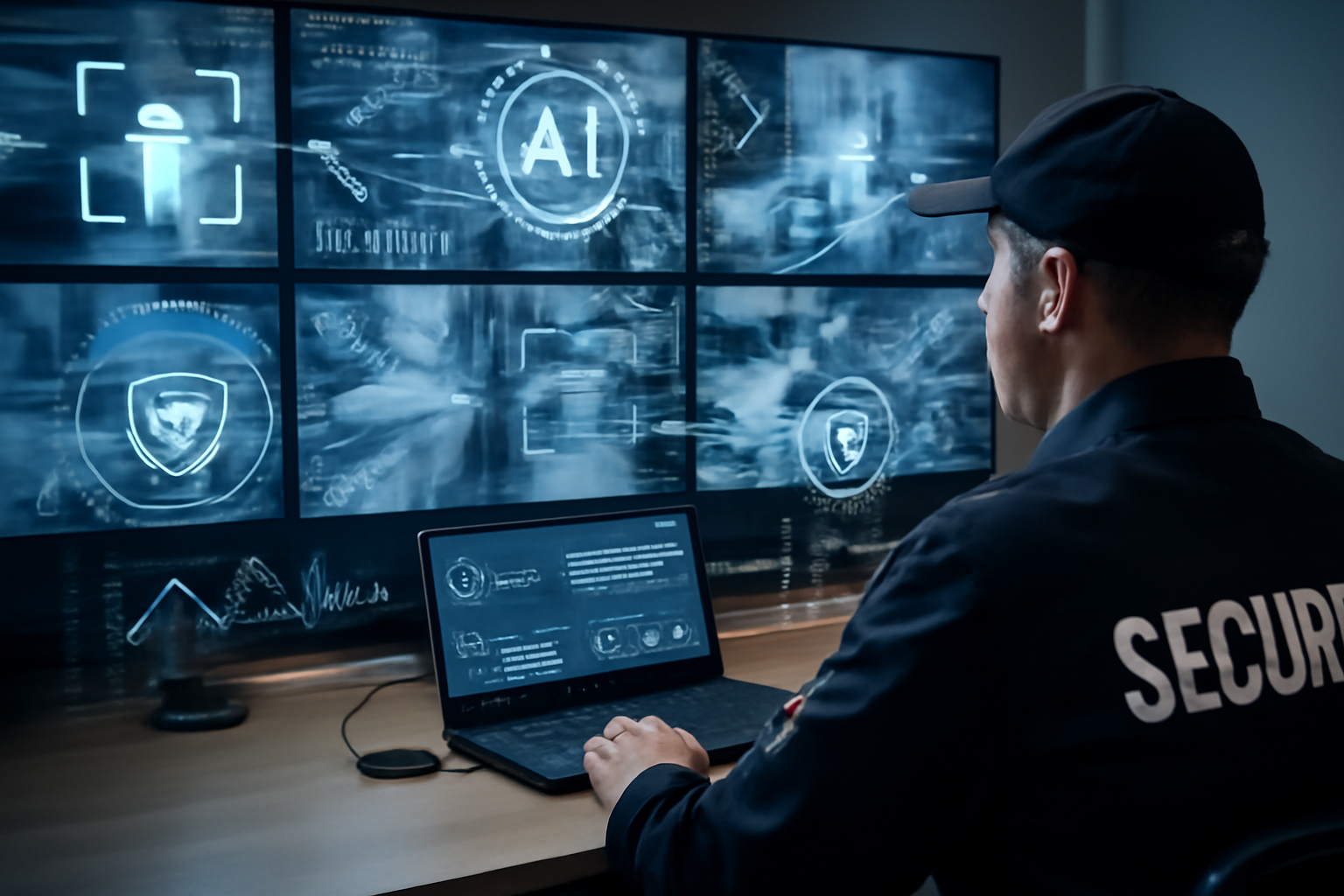
The Future of Cybersecurity in Physical Security
Technology is changing fast. Security guards now deal with more than locked doors and foot patrols. Smart devices, artificial intelligence (AI), and the Internet of Things (IoT) are becoming part of everyday security work. That means cybersecurity is no longer just an IT problem. It’s your problem too.
What Is Cybersecurity in Physical Security?
Cybersecurity protects digital systems from being hacked or misused. Physical security protects people, buildings, and property. Today, the two overlap. Many cameras, access panels, and alarms are now connected to the internet. If a hacker gets in, they can unlock doors or shut down systems. That’s a big risk. Guards must know how to spot and report cyber threats on the job.
How AI and IoT Are Changing Your Job
Here’s how new tech is showing up in your shift:
- AI Cameras: These cameras can detect motion, faces, or unusual behavior. They alert you faster.
- IoT Devices: Smart locks, sensors, and alarms are all connected. They send data to a central system.
- Access Control Systems: Many use cloud-based software. That means they can be hacked if not secured.
This tech helps you do your job better, but it also adds new risks. A hacker could disable a gate or unlock a secure area. You need to know what to look for.
Shift Checklist: Cyber-Aware Guard Duties
- Check all electronic devices for signs of tampering (blinking lights, error messages, or strange behavior)
- Report any system alerts or unusual access logs
- Keep passwords secure—never write them down or share them
- Log out of systems when not in use
- Don’t plug in unknown USB drives or devices
- Follow site policy and local law for reporting cyber incidents
Quick Scenario: Smart Lock Compromise
You’re doing your rounds and notice a door that’s supposed to be locked is open. The smart lock shows a green light, but no one has signed in. You check the access log—it’s blank for the past hour.
What to do:
- Secure the area immediately.
- Report the issue to your supervisor and IT contact.
- Document everything: time, location, what you saw.
- Follow site policy for possible cyber intrusion.
This could be a sign of a hacked system. Quick action protects the site and shows you’re alert.
3 Common Questions About Cybersecurity on the Job
1. Do I need to be a computer expert?
No. You just need to know the basics: how to spot strange behavior in systems, follow protocol, and report problems fast.
2. What if I make a mistake with a smart system?
Report it right away. Don’t try to hide it. Mistakes happen. What matters is how quickly you act to fix them.
3. Should I update software or devices?
Only if your site policy says so. Some updates must be done by IT. If you see a device asking for an update, report it.
Action Takeaway: Be Cyber-Aware on Every Shift
Cyber threats are real. Even if you never touch a keyboard, you’re still on the front line. Watch for unusual behavior in smart systems. Lock down areas if something seems off. Report issues fast. Your awareness could stop a serious breach.
“Stay alert. Stay connected. Cybersecurity starts with you.”
As tech keeps growing, so does your role. Keep learning. Keep protecting. And always follow site policy and local law when dealing with cyber issues.

