
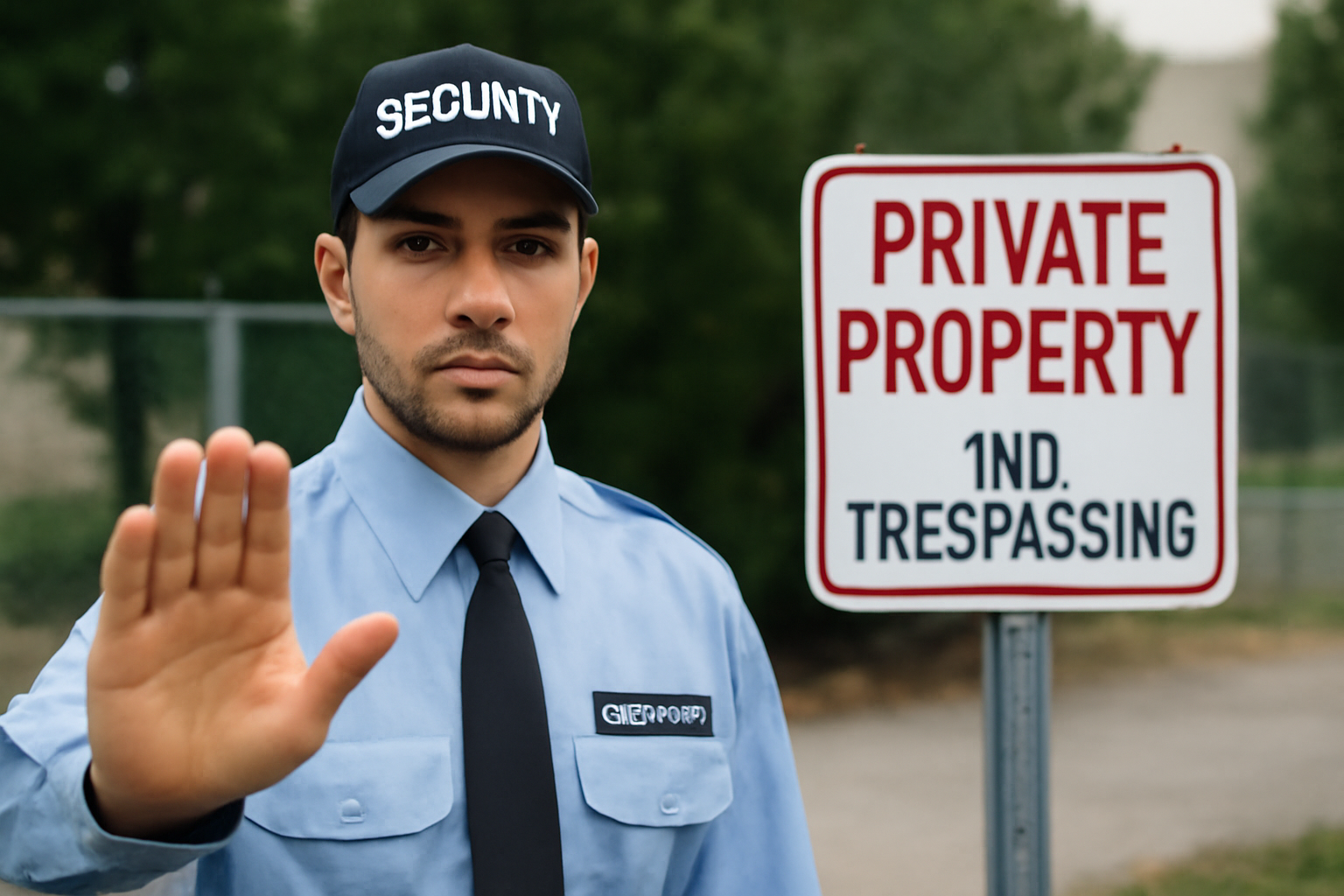
The Limits of Security Authority
As a private security guard, you play a crucial role in keeping people and property safe. But your authority is not unlimited. Knowing what you can—and can’t—legally do on the job protects you, your employer, and the public.
What Security Guards Can Do
Your authority comes from your employer and is limited by the law. Here’s what you’re typically allowed to do:
- Observe and report: Your main job is to watch for suspicious activity and report it to the proper authorities.
- Enforce site rules: You can ask people to follow policies on private property, like “no trespassing” or “no smoking.”
- Perform citizen’s arrests: In some places, you’re allowed to detain someone for a crime until police arrive. But this comes with risks. Always follow site policy and local law.
- Control access: You can check IDs, manage entry points, and turn away unauthorized people from private areas.
- Use reasonable force: Only when necessary to protect yourself or others. Never use more force than needed.
What You Cannot Do
There are clear lines you should never cross. You are not a police officer. Here’s what’s off-limits:
- No arrests without cause: You can’t detain someone just because they look suspicious. You need a clear, witnessed crime.
- No searches without consent: You can’t search someone’s bag or person unless they agree or site policy allows it (like at a concert or event).
- No impersonating law enforcement: Never say or suggest you are a police officer. It’s illegal and dangerous.
- No use of excessive force: You must always try to de-escalate. Physical action is a last resort.
- No off-duty enforcement: Your authority ends when you’re off the clock unless your employer says otherwise.
Shift Checklist: Staying Within Your Limits
- Review site policy before each shift.
- Know local laws about citizen’s arrest and use of force.
- Keep your radio and incident report forms ready.
- Stay calm and respectful with the public.
- Call law enforcement when needed—don’t try to handle criminal acts alone.
Quick Scenario
You’re working a retail post. A customer walks out with unpaid merchandise. You see it clearly.
You can follow the person at a safe distance, call store management, and notify police. If your site allows, you may detain the person using minimal force until police arrive. You cannot tackle them, search their bag without consent, or block their way with force unless there’s a real threat.
Always choose safety. If you’re unsure, step back and call for backup or law enforcement.
3 Quick FAQs
1. Can I handcuff someone?
Only if your site policy allows it and you’ve been trained. Use only if the person is a threat or trying to flee after a crime.
2. Can I tell someone to leave the property?
Yes, if they’re violating rules. If they refuse, you can ask police to remove them for trespassing.
3. Can I carry a weapon?
Only if licensed and approved by your employer. Always follow local law and company policy.
Key Takeaway
Know your role. You’re there to observe, report, and protect—not to act as law enforcement. Stay within your authority. When in doubt, call it in. Your safety and career depend on it.

