
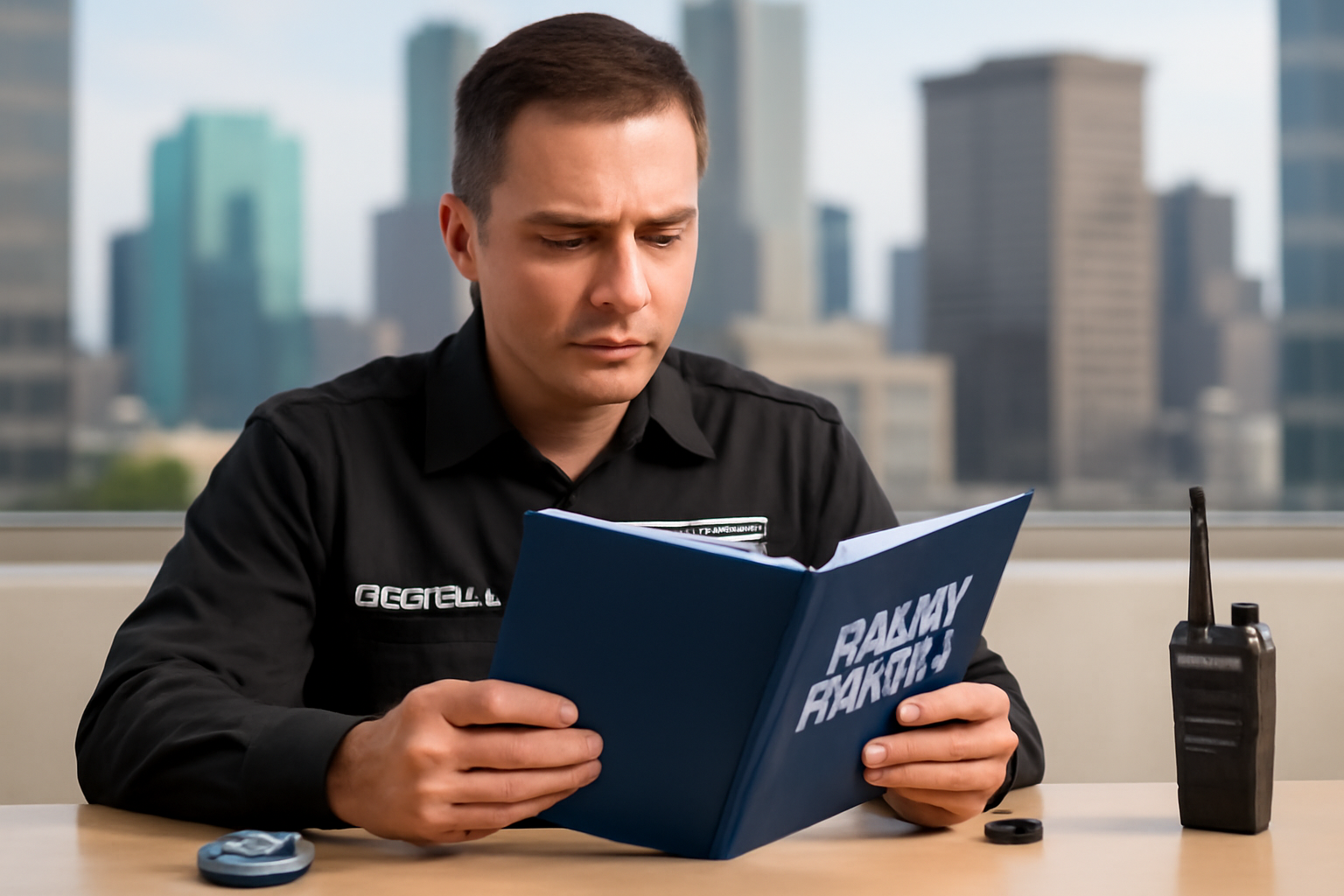
Understanding Security Laws and Regulations
As a private security officer, knowing the laws and rules that apply to your job is critical. They shape what you can and cannot do. This article gives you a clear overview of the legal side of security work. We’ll cover the basics, offer practical tips, and help you stay within the law while staying safe.
Why Security Laws Matter
Security guards are not police officers. Your authority comes from your employer and from local laws. Misunderstanding your role can lead to legal trouble—for you and your company. That’s why it’s important to follow site policy and local law at all times.
Types of Laws That Affect Your Job
Several types of laws apply to private security. These vary by state, county, and even city. But most fall into these areas:
- Licensing laws: Most states require guards to be licensed. This often means passing a background check and completing training.
- Use-of-force laws: These laws say when and how you can use physical force. Deadly force is rarely allowed. Always follow your training.
- Citizen’s arrest laws: In some cases, you may stop someone committing a crime. But laws vary widely. Know what’s allowed in your state.
- Search and seizure laws: You can’t search someone without permission unless site policy and law allow it. Be very cautious here.
- Reporting laws: Some incidents must be reported to police or your licensing board. Know your duty to report.
Common Legal Limits on Guards
Even when you’re in uniform and on duty, there are limits to what you can do. Here are some things you typically cannot do:
- Carry weapons without proper permits and training
- Use force unless it is reasonable and necessary
- Detain someone without cause
- Search personal property without consent or legal reason
- Impersonate a police officer
Always follow your company’s post orders and site-specific rules. If unsure, ask your supervisor.
Shift Checklist: Legal Awareness
- Do I have my license and ID with me?
- Do I know the site rules and post orders?
- Am I clear on what I can and cannot do here?
- Have I reviewed use-of-force policy lately?
- Do I know who to call if there’s a legal question?
Quick Scenario: Detaining a Suspect
You see someone slip merchandise into their jacket and head for the exit. You approach and ask them to stop. They run. You chase them outside the store and tackle them.
Problem: You may have just used force off-property. That could be a legal issue.
Better approach: Stay on property. Call law enforcement. Follow your site’s policy. If you must detain, use the least force needed and wait for police.
3 Quick FAQs
1. Can I arrest someone?
In some states, guards can make a citizen’s arrest for certain crimes. But the rules vary. Only act if you are trained and sure of the law. When in doubt, call law enforcement.
2. Can I carry a weapon?
Only if licensed and trained. Some states require extra permits for armed guards. Never carry a weapon unless your post allows it and you meet all legal requirements.
3. Can I search someone’s bag?
Only if they agree (consent), or if site policy allows it under specific rules. Random searches without cause may violate rights. Always follow company policy and local law.
Key Takeaway
Know your legal limits. Follow your training, post orders, and local laws. When unsure, ask a supervisor or call law enforcement. Safety and legality come first.
What You Can Do Today
- Review your state’s security guard licensing rules
- Ask your supervisor for your site’s use-of-force policy
- Practice writing clear, factual incident reports
- Know when to call law enforcement vs. handling it yourself
- Stay calm and professional in all situations
Understanding the law helps you protect people and property—without putting yourself or your company at risk. Stay sharp, stay safe, and always act within your legal duties.

