
Future of Private Security Training
Private security is changing fast. New tools like AI, virtual reality (VR), and smart apps are changing how guards train. These tools make learning faster, safer, and more real. Here’s what’s coming—and how to get ready.
Why Training Needs to Evolve
Security jobs are more complex today. Guards deal with more tech, more people, and faster decisions. Old training methods—like paper manuals and classroom-only lessons—can’t keep up. New tech helps close the gap.
What’s New in Training
- AI-Powered Simulations: AI creates real-time situations based on your choices. You learn from mistakes without real-world risks.
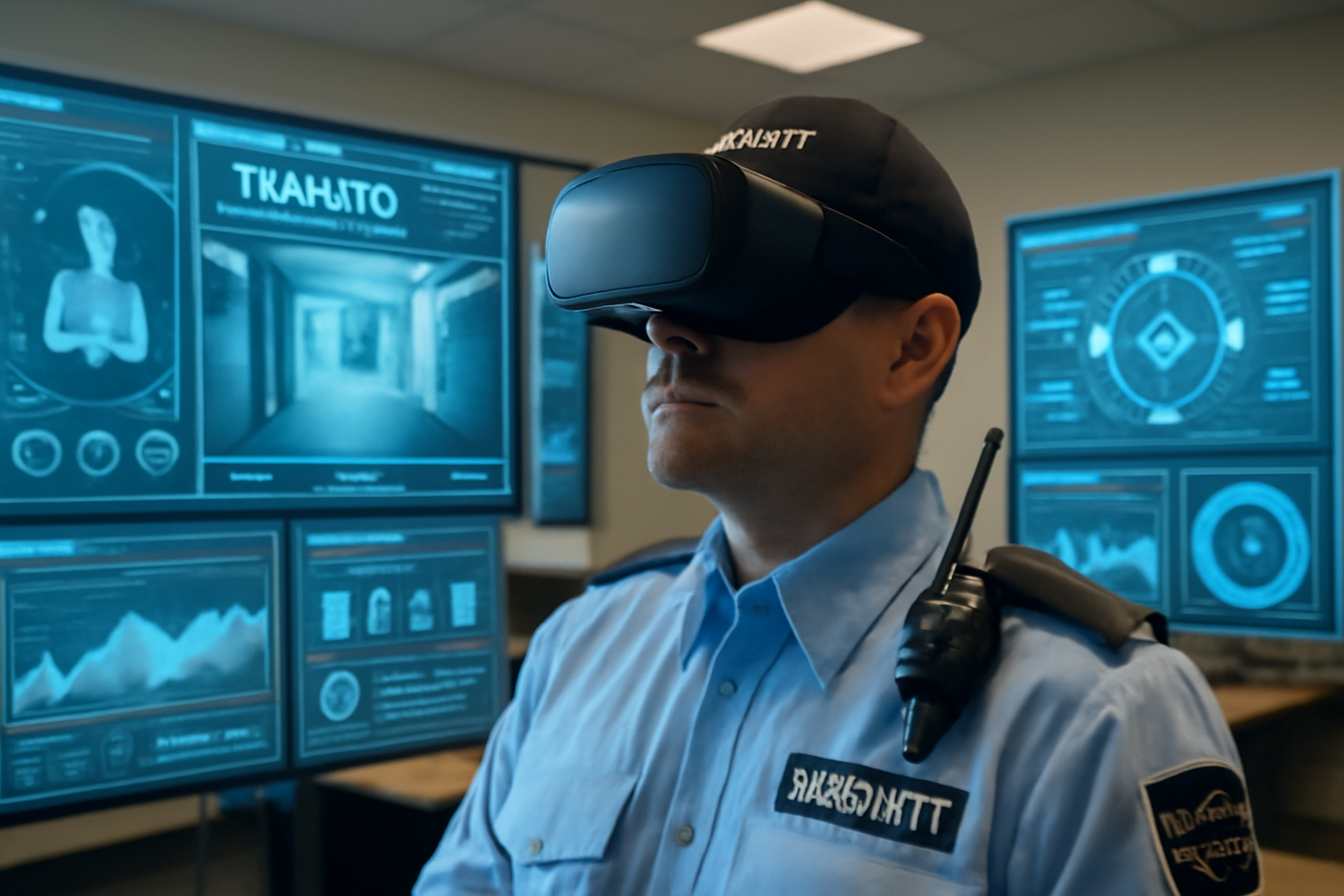
- Virtual Reality (VR): VR puts you inside a 3D scene. You can practice patrols, deal with threats, or respond to emergencies.
- Mobile Learning Apps: Quick lessons on your phone. Learn while on break or between shifts.
- Wearable Tech: Some companies use smart glasses and watches to give live feedback during drills.
- Data-Driven Feedback: New tools track your reactions, timing, and choices. Trainers use this to help you improve.
Shift Checklist: What to Ask Your Supervisor
- Are we using any AI or VR training tools yet?
- Can I access mobile training modules during breaks?
- Is there a policy for using wearables during training?
- How is my training progress tracked?
- Is refresher training available using tech?
Scenario: Training with VR
You put on a VR headset. You’re now inside a shopping mall at night. A motion alert comes from the east wing. You walk toward it. A man appears, pacing and shouting. You call for backup. You try verbal commands. He calms down. The system scores your choices and gives tips. You remove the headset, ready for the real thing.
3 Quick FAQs
1. Will AI replace trainers?
No. AI helps trainers. It gives data and simulates situations. But human experience is still key. Trainers guide and explain.
2. Is VR training safe?
Yes, when used right. It’s made for learning. But always follow site policy and local law during training.
3. Do I need new skills to use this tech?
Not really. Most tools are easy to learn. If you can use a smartphone, you can handle mobile and VR training. Ask for help if needed.
Action Takeaway
Tech is changing how we train. But the goal stays the same—keep people safe. Stay open to learning. Try new tools. Ask questions. The better you train, the better you protect.
“The tools may change, but the mission stays the same: protect and serve.”
Final Tip
Next time you get a training update, ask if there’s a tech-based option. It might save time—and make you sharper on the job.

