
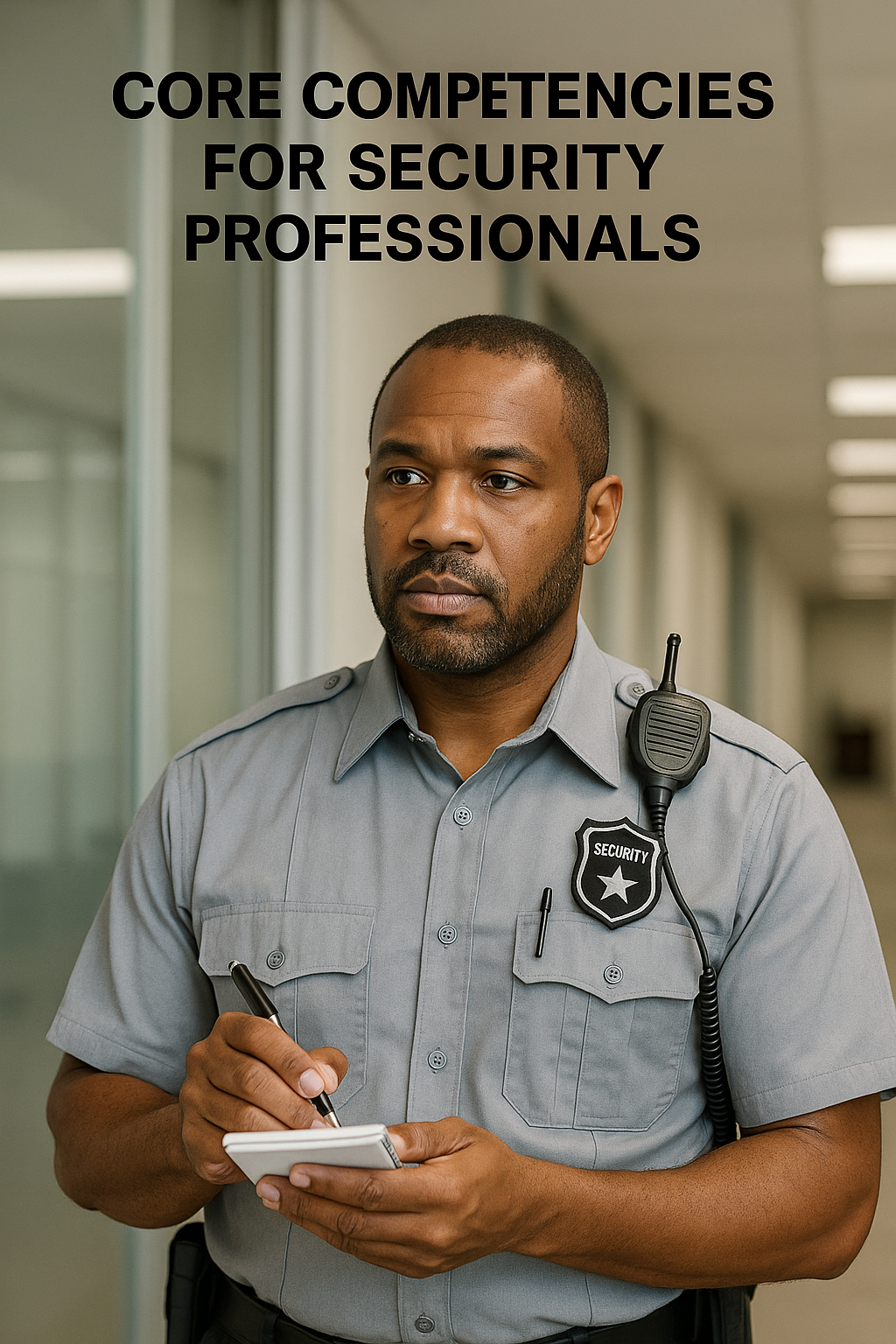
Core Competencies for Security Professionals
Being a private security officer is more than wearing a uniform. It means staying alert, acting with purpose, and knowing what to do when things go wrong. The best guards build strong habits and sharpen their skills every day. This guide covers the key competencies every officer should master.
Observation and Awareness
Good security starts with seeing what others miss. Your eyes and ears are your best tools. Stay alert to your surroundings at all times.
- Scan your area regularly — look for anything out of place.
- Watch for changes in lighting, smells, or behavior.
- Listen for unusual sounds — alarms, arguments, or breaking glass.
Be aware of people’s body language. Nervous or aggressive behavior can be a warning sign.
Communication Skills
Clear communication keeps everyone safer. Whether you’re writing reports or talking to coworkers, speak plainly and respectfully.
- Use your radio properly — short, clear messages.
- Stay calm and polite when speaking to the public.
- Write reports that are simple, factual, and complete.
When in doubt, repeat important info to confirm understanding.
Professionalism
How you carry yourself matters. You represent your company and your site.
- Wear your uniform correctly and keep it clean.
- Show up on time and ready to work.
- Follow post orders and instructions exactly.
Be respectful, even if others aren’t. Don’t argue or get personal. Stay cool and stick to your job.
Access Control and Patrol
Controlling who enters and exits is a basic duty. So is checking that everything is secure.
- Check IDs, badges, or passes as required.
- Log all visitors and deliveries if that’s the rule.
- Patrol all assigned areas — don’t skip or rush.
Look for unlocked doors, broken lights, or hazards like spills or debris. Report and fix them when possible.
Incident Response
When something goes wrong, your response matters. Stay calm and follow your training.
- Call for help if needed — don’t try to handle everything alone.
- Use your radio to report clearly and quickly.
- Follow your site’s emergency procedures.
Always put safety first. Protect people and property, but never take risks beyond your role.
Shift Checklist
Use this list to stay on track every shift:
- ✔️ Arrive early and check in with your supervisor
- ✔️ Review post orders and recent incident reports
- ✔️ Inspect your gear — radio, flashlight, notepad
- ✔️ Walk your patrol route and note any issues
- ✔️ Log all activity clearly and on time
- ✔️ Stay visible and alert throughout your shift
Scenario: Suspicious Vehicle in the Lot
You notice a car parked in the employee lot after hours. The engine is off, but someone is inside. What do you do?
- Observe from a safe distance. Note the make, color, and plate.
- Call your supervisor or dispatch. Follow site policy.
- Do not approach unless trained and instructed to do so.
- Log the incident in your report with time, actions, and outcome.
Stay safe. Never confront someone unless it’s part of your duties and you have backup.
3-Question FAQ
1. What if I see something but I’m not sure it’s a problem?
Report it anyway. It’s better to be cautious. Let your supervisor decide.
2. How do I handle someone being rude or aggressive?
Stay calm. Don’t argue. Use your radio to call for help if needed. Follow site policy and local law.
3. I forgot to report something during my shift. What now?
Let your supervisor know as soon as possible. Always be honest. It’s better to admit a mistake than cover it up.
Takeaway
Security work is serious. Your duties protect people and property. To do your job well, focus on your core skills: stay alert, communicate clearly, act professionally, and follow the rules. Every shift is a chance to practice and improve.
“Stay ready. Stay sharp. Stay safe.”

