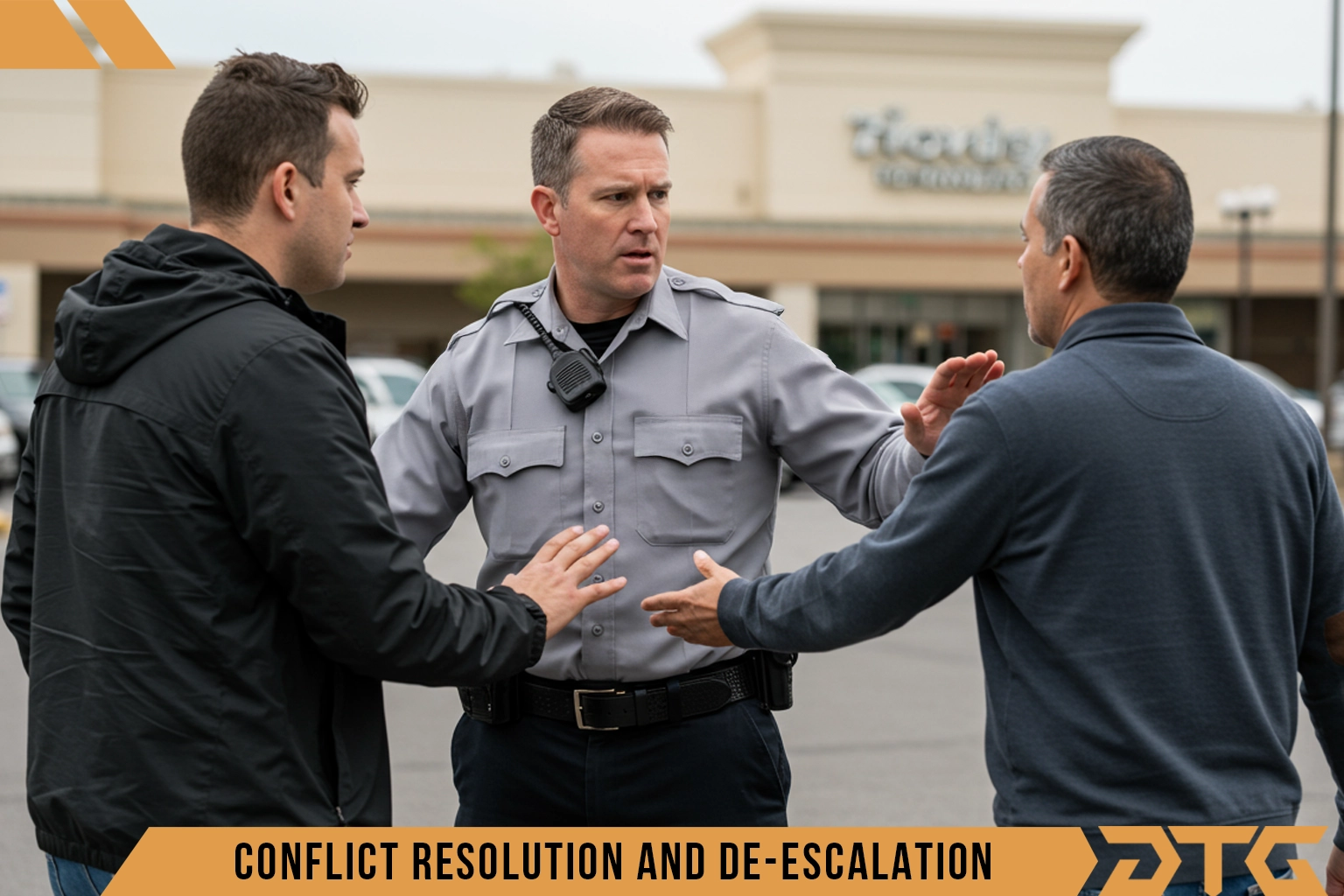
Conflict Resolution and De-Escalation

About Course

This course is designed to equip physical security guards with the essential skills and strategies to handle conflict situations effectively.

By focusing on conflict resolution and de-escalation techniques, participants will learn how to assess situations, defuse tension, and resolve conflicts in a safe and professional manner.

This course is ideal for both new and experienced security personnel who want to improve their communication skills, understand human behavior, and enhance their ability to handle potentially volatile situations.

Key Objectives:

  • Understand the root causes of conflict in security environments

  • Identify early warning signs of aggression or hostility

  • Apply effective verbal and non-verbal de-escalation tactics

  • Maintain personal safety and professionalism during confrontations

  • Document and report conflict incidents accurately

Show More

What Will You Learn?

  • Define different types of conflict and why they matter in security work
  • Apply core de-escalation techniques to calm tense situations
  • Recognize verbal and non-verbal signs of escalation
  • Use active listening and empathy to build trust quickly
  • Communicate clearly with the right tone, body language, and space
  • Stay calm and manage your own stress during high-pressure moments
  • Apply proven conflict resolution models to real-world scenarios
  • Navigate cultural differences and avoid bias in conflict situations
  • Respond effectively to individuals in crisis or group conflicts
  • Understand the legal and ethical boundaries of conflict resolution

Course Content

Introduction to Conflict Resolution
Conflict resolution is the ability to manage and resolve disputes calmly and effectively. This lesson teaches security guards how to recognize different types of conflict, stay calm under pressure, and use emotional intelligence to defuse tense situations and protect people and property.

  • Lesson 1: Introduction to Conflict Resolution
    03:14
  • Quiz

Fundamentals of De-escalation
In this lesson, you learned the fundamentals of de-escalation, a critical skill for security guards. De-escalation is about calming a situation before it turns into a physical or verbal conflict. You explored signs of escalation—such as loud voices, aggressive body language, and facial tension—and practiced specific techniques like active listening, giving space, staying calm, and using empathy. These skills help reduce tension and guide situations toward peaceful outcomes.

Communication Strategies for Conflict Resolution
In this lesson, security guards learn the importance of effective communication in resolving conflicts. The content covers both verbal and non-verbal techniques, such as using a calm tone, choosing words carefully, maintaining open body language, and listening actively. The lesson also highlights how to avoid triggering language and how to steer conversations toward solutions. By applying these communication strategies, guards can defuse tension and professionally manage challenging interactions.

Managing High-Stress Situations
In this lesson, you learned how stress affects the body and mind during high-pressure situations and why managing that stress is crucial for effective decision-making. You explored techniques like controlled breathing, staying present, using positive self-talk, and recognizing signs of the fight-or-flight response. The lesson also covered how to remain calm and in control during group conflicts and how to reflect and recover after stressful events. These strategies will help you stay focused, think clearly, and respond professionally in even the most intense scenarios.

Conflict Resolution Models
In this lesson, security guards learn about the five main conflict resolution styles—Avoiding, Accommodating, Competing, Compromising, and Collaborating. Each model offers a different approach to handling disputes, and choosing the right one depends on the situation and the people involved. Guards are taught how to assess the conflict, select the appropriate strategy, and apply it to achieve a safe and effective resolution. This lesson equips guards with the flexibility to handle conflicts professionally, whether through standing firm, yielding, compromising, or facilitating cooperation.

Cultural Awareness and Conflict
In this lesson, we’ll talk about cultural awareness and how it impacts conflict. As a security guard, you will often interact with people from different cultural backgrounds. Understanding and respecting these differences can help you avoid misunderstandings and resolve conflicts more effectively. By the end of this lesson, you’ll have a better understanding of how cultural awareness plays a role in conflict situations and how to use it to your advantage.

Advanced De-escalation Techniques
In this lesson, we’ll focus on advanced de-escalation techniques for handling more complex and challenging situations. You may encounter individuals who are in crisis, under the influence, or experiencing mental health issues. These situations require a deeper understanding of de-escalation strategies. By the end of this lesson, you’ll be able to recognize high-risk scenarios and apply advanced techniques to keep the situation under control.

Legal and Ethical Considerations in Conflict Resolution
In this lesson, we’ll focus on the legal and ethical considerations you need to be aware of as a security guard when managing conflicts. Handling conflicts isn’t just about calming people down; you must also make sure you’re acting within the law and in an ethical manner. By the end of this lesson, you’ll have a better understanding of your legal responsibilities and the importance of making ethical choices during conflict resolution.

Student Ratings & Reviews

No Review Yet
No Review Yet

Material Includes

  • Video lessons (1 per topic)
  • Quizzes for some lessons
  • Assignments for some lessons
  • Certificate of Completion
  • Access to Q&A and discussion boards

Requirements

  • No prior experience required
  • A willingness to learn and maintain a high standard of professionalism
  • Stable internet connection to access video content
  • Recommended: Notebook or device to take notes
  • Complete all quizzes and assignments to unlock your certificate

Audience

  • New security guards seeking essential conflict management skills
  • Experienced officers wanting to strengthen de-escalation techniques
  • Supervisors and team leads responsible for frontline incident response
  • Security professionals working in high-stress environments (retail, healthcare, events)
  • Contract security firms looking to upskill staff and reduce liability
  • Corporate and institutional security teams needing compliance-aligned training