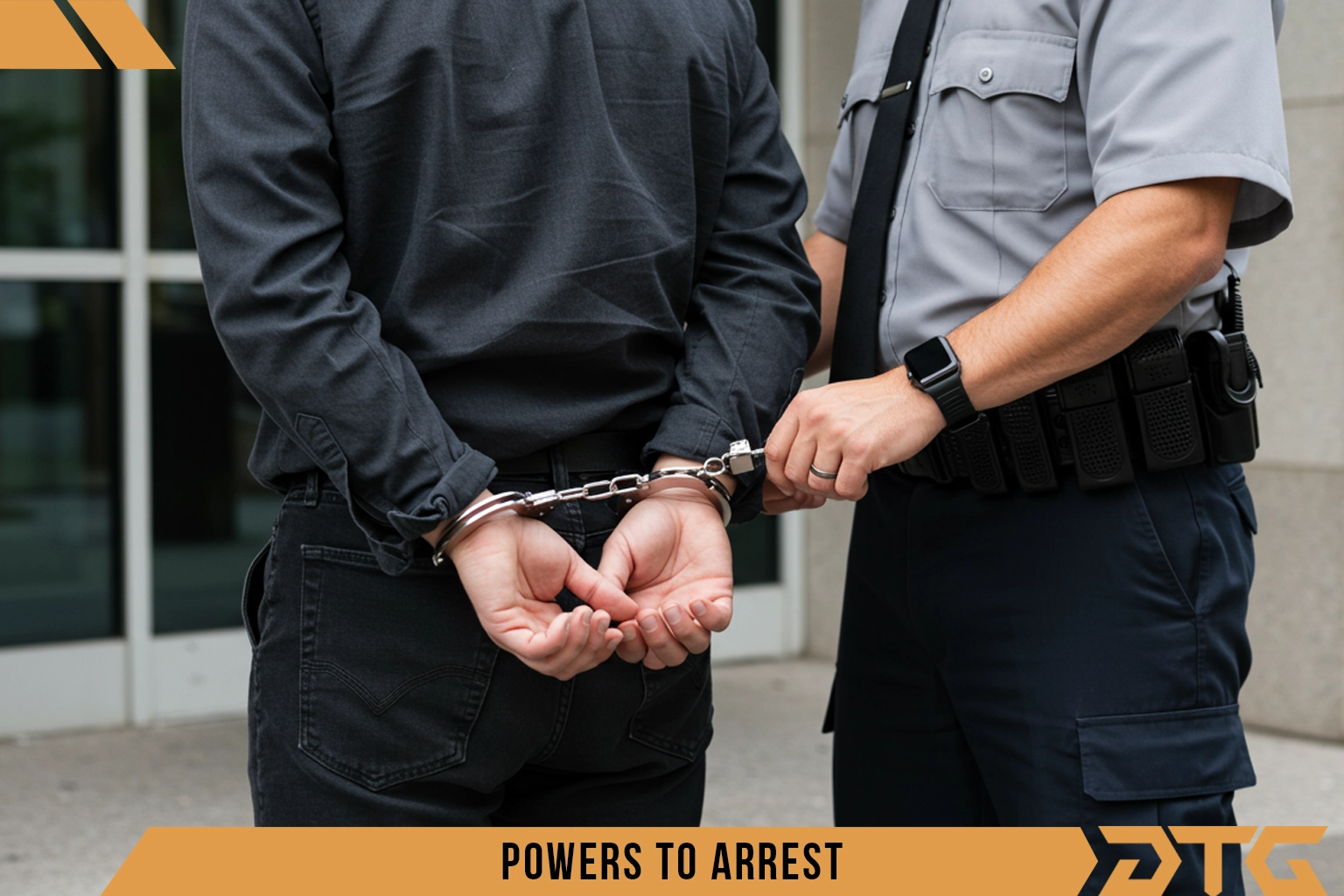
Powers To Arrest

About Course

Course Objective:
To familiarize trainees with legal aspects, techniques, liabilities, and responsibilities related to arrest procedures as per Business and Professions Code section 7583.7. The course will follow the Department of Consumer Affairs’ Power to Arrest and Appropriate Use of Force Training Manual (July 2023). Learning methods will include lecture, discussion, exercises, role-playing, and quizzes.

What Will You Learn?

  • Understand the legal foundations of arrest powers and use of force guidelines
  • Recognize the ethical responsibilities involved in making citizen arrests
  • Distinguish between the role of security guards and peace officers during incidents
  • Identify the limitations of a security officer’s power to arrest under law and policy
  • Apply correct procedures regarding searches and seizures within legal boundaries
  • Recognize potential civil and criminal liabilities tied to arrest decisions
  • Interpret and apply trespass law in real-world security settings
  • Use ethical communication and de-escalation techniques effectively
  • Respond appropriately to emergency situations and coordinate with first responders
  • Maintain personal safety and situational awareness in the field

Course Content

Introduction to Power to Arrest and Appropriate Use of Force Training Manual
Objective: Introduce the training manual, its contents, and the course structure.

  • Lesson 1: Introduction to Power to Arrest and Appropriate Use of Force Training Manual
    03:34

Responsibilities and Ethics in Citizen Arrests
Objective: Understand ethical obligations and scenarios where citizen arrests are appropriate.

Relationship Between Security Personnel and Peace Officers in Arrest Situations
Objective: Clarify the distinct roles of security personnel versus peace officers.

Limitations on Security Personnel’s Power to Arrest
Objective: Understand the specific limits of security personnel's power in arrest situations.

Restrictions on Searches and Seizures
Objective: Familiarize trainees with legal restrictions regarding searches and seizures.

Criminal and Civil Liabilities
Objective: Educate on the legal liabilities involved in making an arrest.

Trespass Law
Objective: Cover the essentials of trespass law as it pertains to security work.

Ethics and Communication
Objective: Develop skills for ethical conduct and effective communication during encounters.

Emergency Situation Response
Objective: Equip trainees with skills for managing medical and other emergency situations.

Security Officer Safety
Objective: Emphasize the importance of personal safety and situational awareness.

Student Ratings & Reviews

No Review Yet
No Review Yet

Material Includes

  • Video lessons (1 per topic)
  • Quizzes for some lessons
  • Assignments for some lessons
  • Certificate of Completion
  • Access to Q&A and discussion boards

Requirements

  • No prior experience required
  • A willingness to learn and maintain a high standard of professionalism
  • Stable internet connection to access video content
  • Recommended: Notebook or device to take notes
  • Complete all quizzes and assignments to unlock your certificate

Audience

  • New security guards preparing for BSIS licensing requirements
  • Experienced officers seeking refresher training on arrest powers
  • Supervisors responsible for overseeing field arrest and detention practices
  • Security personnel working in retail, corporate, and residential environments
  • Private patrol operators seeking compliant, standardized guard training
  • Contract security firms needing liability-conscious training for staff
  • Individuals pursuing a career in security who want to understand legal foundations